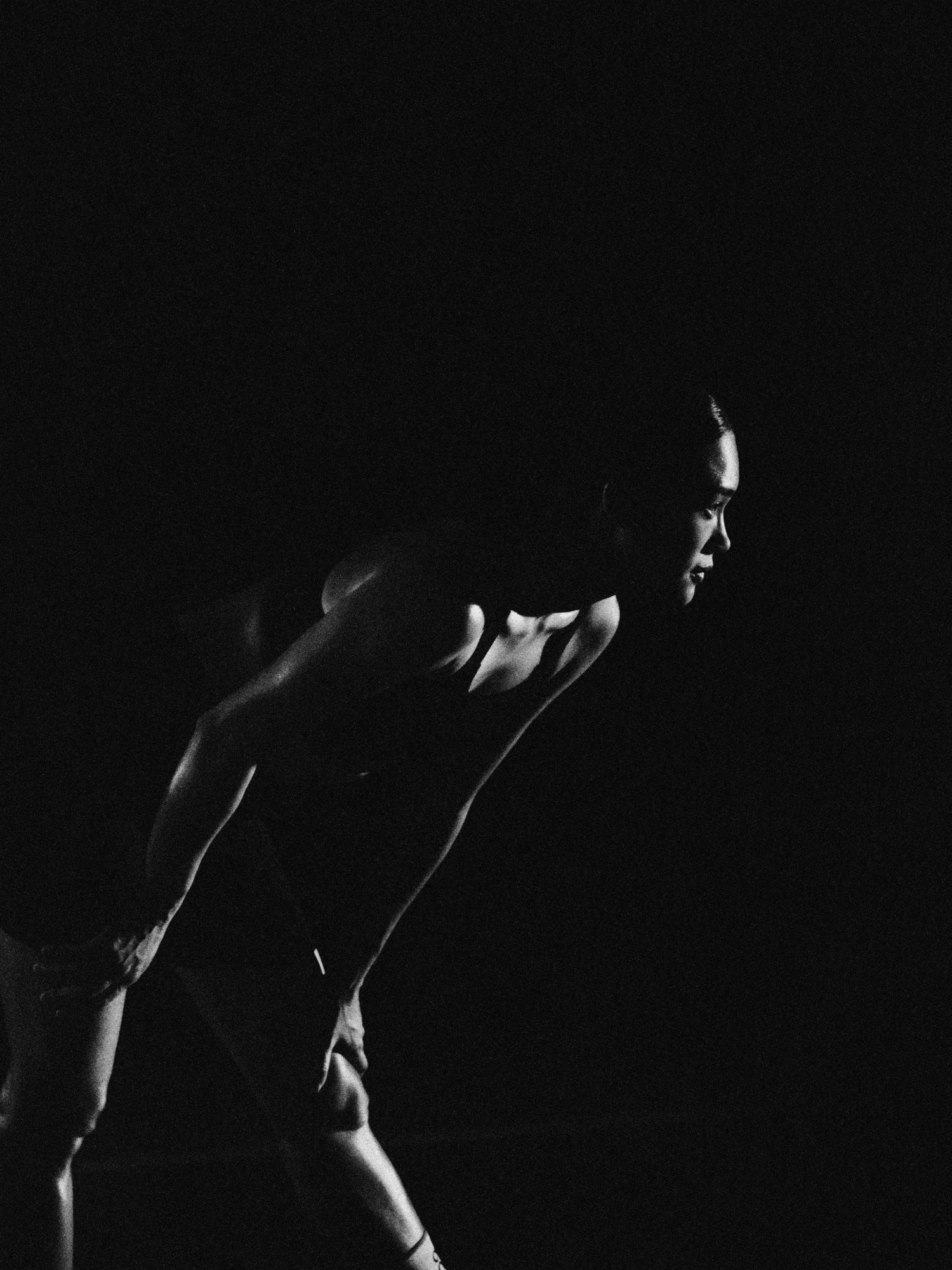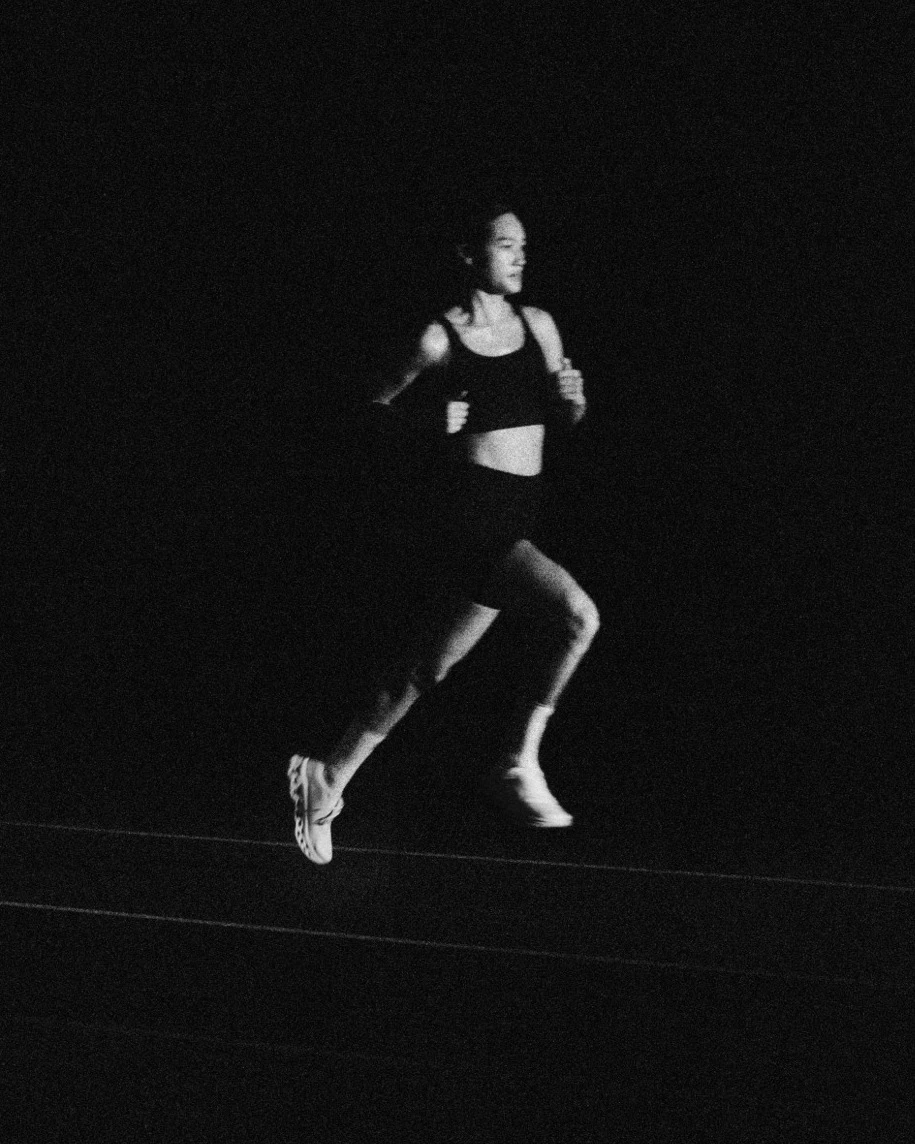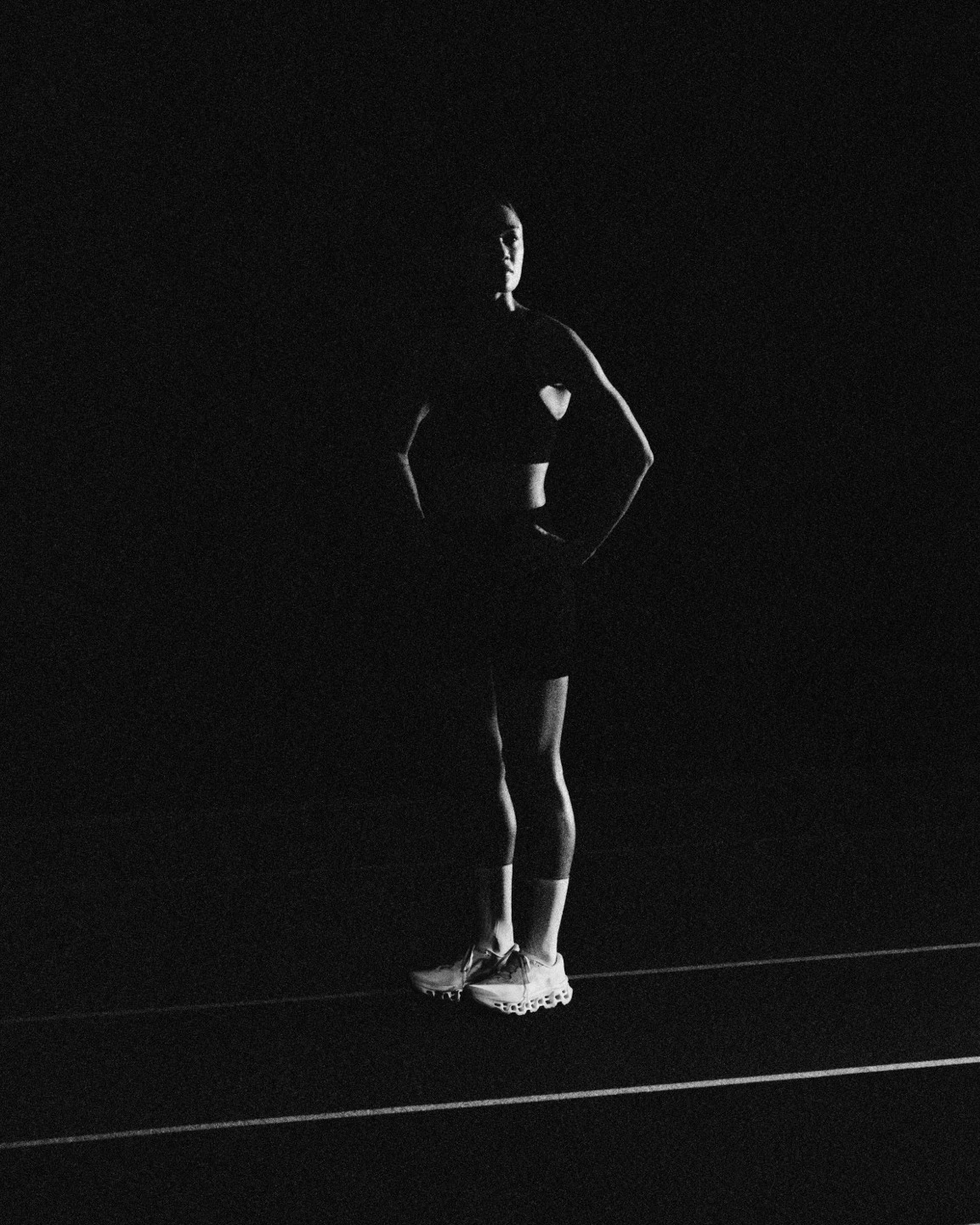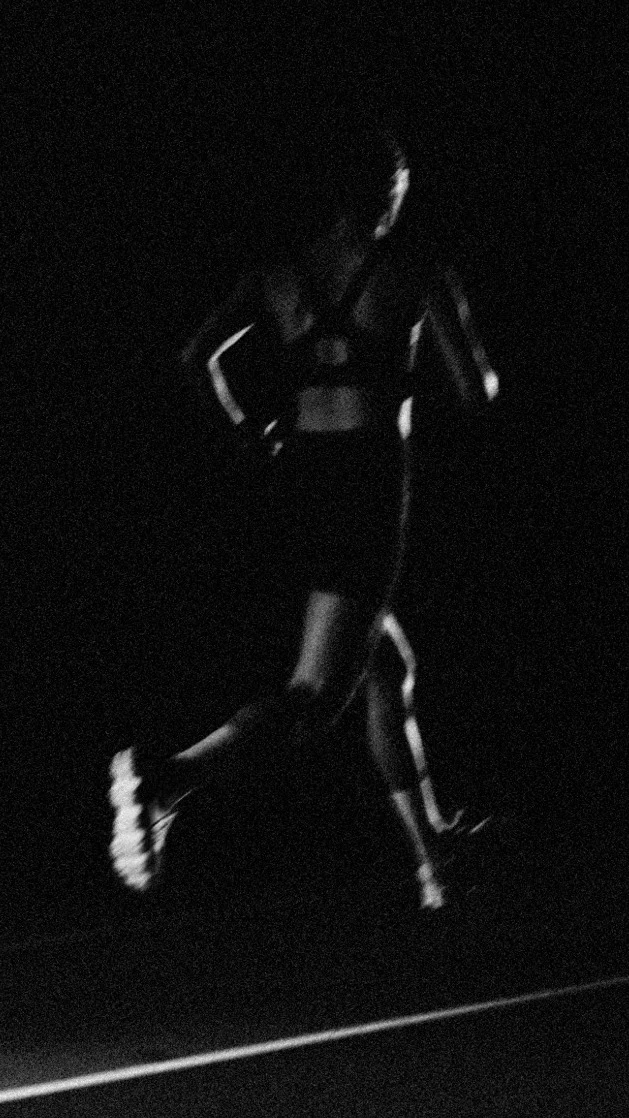
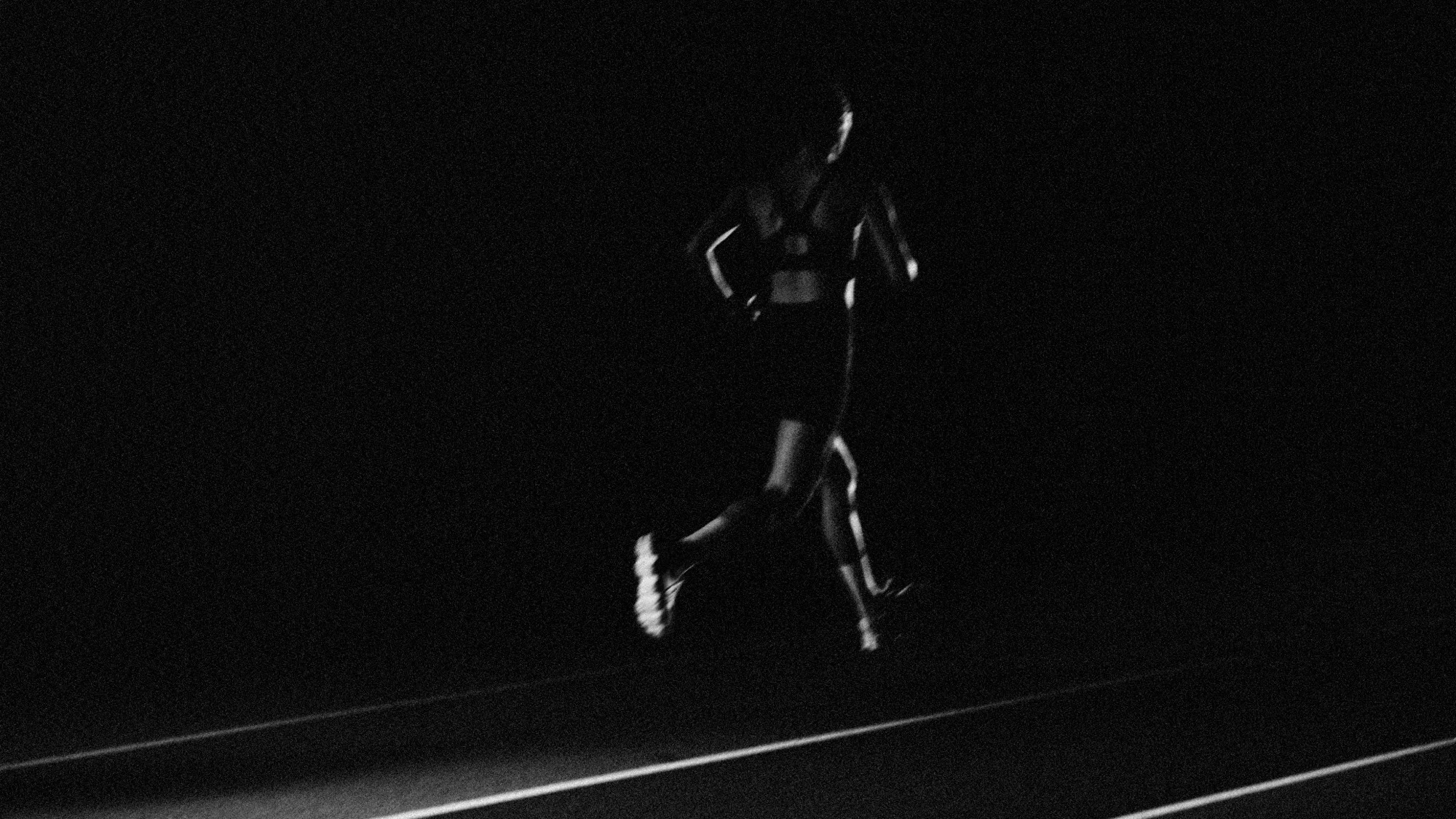
Inspired by the fastest lane on the track and developed with world-class running partners, Lane 1 (LN1) is a mindset and global collective – built on ritual, chosen effort, and the guts to go all-in.
It’s 5 a.m. in Orlando, Florida. The sun hasn’t gotten out of bed yet. But Olivier Bernhard – On Co-Founder and former triathlete – and Max Smith, On’s Head of Partnership Management, have been up far too early.
They’re about to race the 2016 Indie 5K before a long day at The Running Event. Bleary-eyed and underslept, they stumble off the bus. Bernhard looks over at Smith.
“Let’s go to the front,” he says.
Smith hesitates. “Why? We haven’t warmed up yet.”
He assumes Bernhard just wants a photo. Bernhard wants the best position on the line.
And the gun goes off. Bernhard takes off hot – a blistering 5-minute-per-mile clip. Smith resists the call to chase. This is supposed to be for fun. But over the next five kilometers, competitiveness gets the best of him.
“We definitely didn't hold back,” the former D1 runner jokes now.
With a half-mile to go, Smith catches Bernhard. They cross the line together. “The feeling of reeling someone in is just the best.”
You can’t fake the will to win.
“It’s in his bones. I guess it's in mine too,” Smith says.
That’s Lane 1.
Across tracks around the world, a sign often reads: “Lane 1 is not for jogging.” Practically, it protects the fastest path – the shortest line, the tightest turn. But culturally, it signals something else.
Lane 1 is for when you’re really going for it.
“My experience of the sport was about total sacrifice, selfishness, pain and complete dedication to a goal that would never be satisfied,” says Smith, who’s also the brains behind the Lane 1 project. “That’s what I wanted to honor with this.”
Lane 1 isn’t for everyone. By nature, it’s exclusive – but not elitist. Anyone can step into it. You just have to choose it.
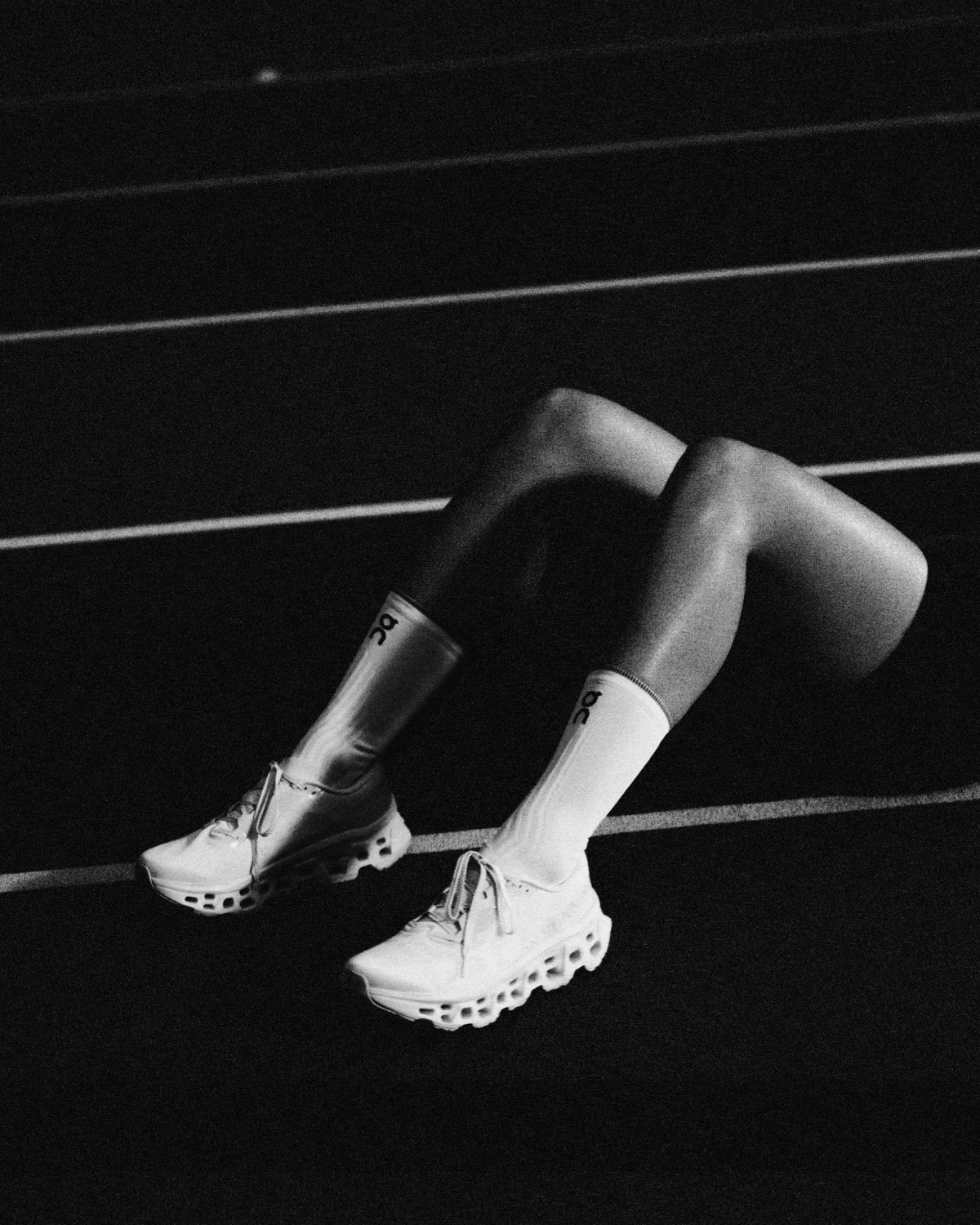
Inspired by the fastest lane on the track, Lane 1 celebrates runners who choose intensity, intentionally. That philosophy also shaped the Cloudmonster 3 LN1, a bespoke expression of our running icon designed for those who treat the run as ritual.
From Oakland, California to Glasgow, Scotland, eleven Lane 1 run retail partners serve as the physical hubs that bring this mindset to life.
Lane 1 is designed as an evergreen platform, evolving season by season through new collections and shaped each year by different external creatives.
In an increasingly frictionless society – where convenience is king – people are hungry for something harder. Something real.
Choosing selective discomfort is the pursuit of effort over ease. That kind of dedication takes sacrifice, obsession and commitment, often against the odds. To the outsider, the running lifestyle can seem illogical: 5 a.m. alarms and oatmeal, skipping happy hour for another session, single-digit bedtimes, legs up against the wall.
There’s no guarantee a race will reward the work you’ve put in. So why choose it?
Because the choice is what gives you agency. Over time, the quiet accumulation of work becomes clarifying.
“The process of training, building and creating regulates us and gives structure to chaos,” say Jonty Brown and Molly Bryan at Runlimited. “You miss events and weekends; you’re exhausted when others are rested. But we’ve realised we are at our worst when we are not chasing something.”
Often the work itself becomes the reward. No one can take that run – that moment where it was just you and your effort – away.
All this “odd behavior” is the point. In a culture built on comfort, trying hard becomes an act of rebellion. And when enough people decide to wake up early and pursue something without a promise of payoff, it creates a vibe shift – from solitude to a shared energy, a culture. That’s how belief becomes belonging. And belonging turns into identity.
Like physical endurance, a runner’s mentality is built through repetition. Lane 1 extends this beyond the individual runner. What begins as personal discipline becomes community.
Lane 1 run retail partners were chosen based on this shared mindset: treating running as more than product. As practice, culture and commitment.
“Like the inside lane, it's not for everyone,” says Smith. “We carefully selected world-class running partners to bring our vision to life.”
More than a decade in the making, these relationships were built with intention. Today, that alignment spans continents – from Goodrunner in Seoul, Up There Athletics in Melbourne and Metta Running House in Mexico City, to The Exchange Running Collective in Nashville, The Loop in Austin, and Mill City Running in Minneapolis.
Each partner interprets the Lane 1 ethos through its own local running culture.
Across the Pacific, Renegade Running in Oakland and Run As You Are (RAYA) in Vancouver bring their own perspective to running culture. In Europe, Runlimited in London, Achilles Heel in Glasgow and Distance in Paris and Lyon anchor their communities through discipline, ritual and deep expertise.
For Smith, the bar was clear: “Are they just cut-and-paste or do they have a social mission? Are these partners serving the community in a real way?”
His aim was to give partners “the tools to tell the Lane 1 story the way they want to tell it and let them believe in it.”
Mangki Ye, CEO of Goodrunner in Seoul, sees Lane 1 as responsibility rather than status. “Lane 1 is not the position of an elite runner,” he says. “It’s the position that protects the essence of running. Being on the innermost lane doesn’t mean being ahead of others. It means being the first to take responsibility for running culture.”
At Up There Athletics, that mindset shows up as accountability. “You don’t get to hide. You don’t get to coast. You’re setting the tone, for product, for culture, for community,” says Patrick Monti, Brand Manager. “We choose discipline over comfort and long-term credibility over short-term noise. It’s about curation over volume – saying no to easy wins if they dilute our positioning.”
For Distance Co-founder Guillaume Pontier, Lane 1 is about performance. “Always optimizing, always pushing for the most efficient path forward.”
From the beginning, Max Smith imagined a place where creatives worked within performance to tell the stories of the dedicated athlete training towards something meaningful. “Brands have long provided platforms for creatives to play in the fashion space, and brought to life through iconic retailers like Dover Street Market or Kith,” he says. “Why not in the emerging icons of the run specialty?”
Drawing from skate and surf culture, Brown and Bryan at Runlimited view the shop as a hub of inspiration. “Culture is defined by what you reward,” he explains. “We celebrate first steps as loudly as ultramarathons. Belonging and inspiration matter more.”
At Goodrunner, Ye sees retail as a cultural responsibility. “Product is only the outcome,” he says. “The attitude and narrative within it matter more. Our stores are spaces where runners prove something to themselves.”
Through architecture, playlists, long runs and race-day rituals, Lane 1 partners are building communities (and brands) that extend beyond four walls.
Right foot, left foot. Stack wood, carry water. Brick by brick. Running is built on small acts repeated until they become something lasting. “Excellence is not an act but a habit,” Aristotle famously said. Habits are engineered through routines, which create consistency – and rituals, which create identity. Runners rely on both.
Routines are structural: training plans, workout splits, recovery windows. They build physical capacity.
Rituals are harder to see. They’re psychological, even spiritual: the coffee before dawn, the playlist (or silence) before effort, the way you tie your laces. What looks like ‘just running’ can transform into something closer to sacred, quietly scaffolding the runner’s inner world as much as the outer one.
Monti of Up There Athletics describes his ritual before a hard session: “The hour before leaving the house, when everyone is still sleeping. The physical act of preparing or just being. It’s a small pause before discomfort. It reminds me that hard sessions are a privilege, not a punishment. That anchors me and turns anxiety into intention.” For Brown at Runlimited, ritual sounds like silence. “No music or hype, just presence so I can truly feel the session and get lost in it.” For Bryan, her ritual is simple: “Fuel. Life can be chaotic but I’ve learnt from experience to never go into a session under-fuelled.”
Mangki Ye of Goodrunner’s ritual looks like solitude. Before major events or races, he protects time to run alone. “Running, for me, is not physical conditioning,” he says. “It’s mental alignment. While I run, I refine the direction of the event and reset my center.”
Across the Lane 1 collective, that same symmetry exists in retail: opening the shop, brewing coffee, curating playlists, hosting weekly long runs. They sell shoes, but they’re also building culture through small repeated acts. Starting an independently run specialty business isn’t always a logical commercial decision. It’s rooted in love for the run and the culture around it.
“The idea of the ritual,” says Smith, “is building something that speaks to high performance and culture.”
That irrational commitment mirrors the runner’s mindset.
There’s no such thing as peak performance without resistance. It’s a feature, not a bug.
Every runner meets “the wall” – the point in a race or hard session where the body hesitates and the mind starts negotiating for an exit. The discomfort is physical. The doubt is psychological. Overcoming this tension is what makes the effort feel meaningful. Brown from Runlimited knows this wall intimately. “On the fourth day of a 500km race, you think you’ve hit the wall hundreds of times. But a real wall is at the final 8%, falling asleep while running and vomiting at any sudden movement.”
Mangki Ye experienced a different version of the wall while building Goodrunner. “For the first six years, revenue was minimal,” he says. “Every year I asked myself, ‘Is this the right path?’ What helped me continue was not blind optimism. It was the decision not to stop.”
In those moments, mental skills can be the difference between success and stopping. Productive self-talk becomes fuel. A mantra narrows attention to quiet the noise. Visualization brings clarity. And strategic breathwork steadies panic and helps restore control.
One of the most destructive thought patterns in high-performing athletes is catastrophizing discomfort – interpreting fatigue as failure. But what if that same sensation was reframed as information? What if the hurt was trusted as part of the process? The body knows how to move when it’s tired. The shift lies in the power of the mind.
Monti from Up There Athletics has met a different kind of wall: opening during uncertain retail cycles. “Cash flow was tight, energy was stretched and the responsibility was heavy. The first thought when hitting the wall in running and life shouldn’t be panic. It should be ‘Okay, what’s controllable?’ When you hit the wall, ego disappears. Systems matter. People matter. Community matters.”
That’s Lane 1. Not the absence of discomfort or doubt but the ability to move alongside it.
Sometimes the hardest things in life give us the most energy.
“All-in” means committing fully, including recovery.
Hard efforts are a stimulus. And stimulus requires space to adapt. Without balance, high-performance carries risk: obsession, overtraining, burnout and RED-S. Even elite runners step out of Lane 1 to get the most out of their training. Easy miles, stretching, rest days, recovery is where the body and mind absorb the work.
In retail, the stakes are different but the tension is similar. Brown and Bryan at Runlimited left secure jobs to open a performance-led, community-first concept in central London: their own version of stepping into Lane 1.
“No one glamorises the responsibility of rent, staff and inventory, or the pressure of cash flow. That weight is heavier than any race,” they say. “In a race, the suffering is personal. In business, other people are tied to your success.”
Lane 1 isn’t romantic about hardship. Its strength lies in intensity with awareness. Effort – without losing perspective.
The more energy you put in, the more you get back.
That philosophy sits at the heart of the Cloudmonster collection, including its newest addition, Cloudmonster 3 LN1.
This season, we partnered with Mental Athletic to bring the story behind the Cloudmonster 3 LN1 to life – celebrating the energy you feel when run becomes ritual.
We returned to the lab to reimagine our running icon, paying homage to the unseen, daily grind behind every great performance. With three layers of CloudTec®, the Cloudmonster 3 LN1 brings energy to every stride.
Lane 1 is about focus as much as output. When discipline is sharp, gear should disappear. And less distraction means more mental space – more attention on the effort that matters. The Cloudmonster 3 LN1 becomes part of the process, helping steady the breath and find rhythm under fatigue.
A quiet companion to repetition, doubt and breakthrough.
There’s no sign-up sheet for Lane 1. It isn’t required. But for runners who want to reach their potential, a powerful running mindset is.
Built through ritual, routine and daily intention, real running happens in quiet moments – where you hold the pace a little longer or when you push through the wall even when it hurts. Those decisions reveal what you’re capable of.
Once you’ve felt that, it’s hard not to return.
You don’t have to choose it. But if you do, train accordingly. “We’re not latching on to the good old days,” says Smith.
“There’s no straight line to becoming an elite.”
But there’s always Lane 1.