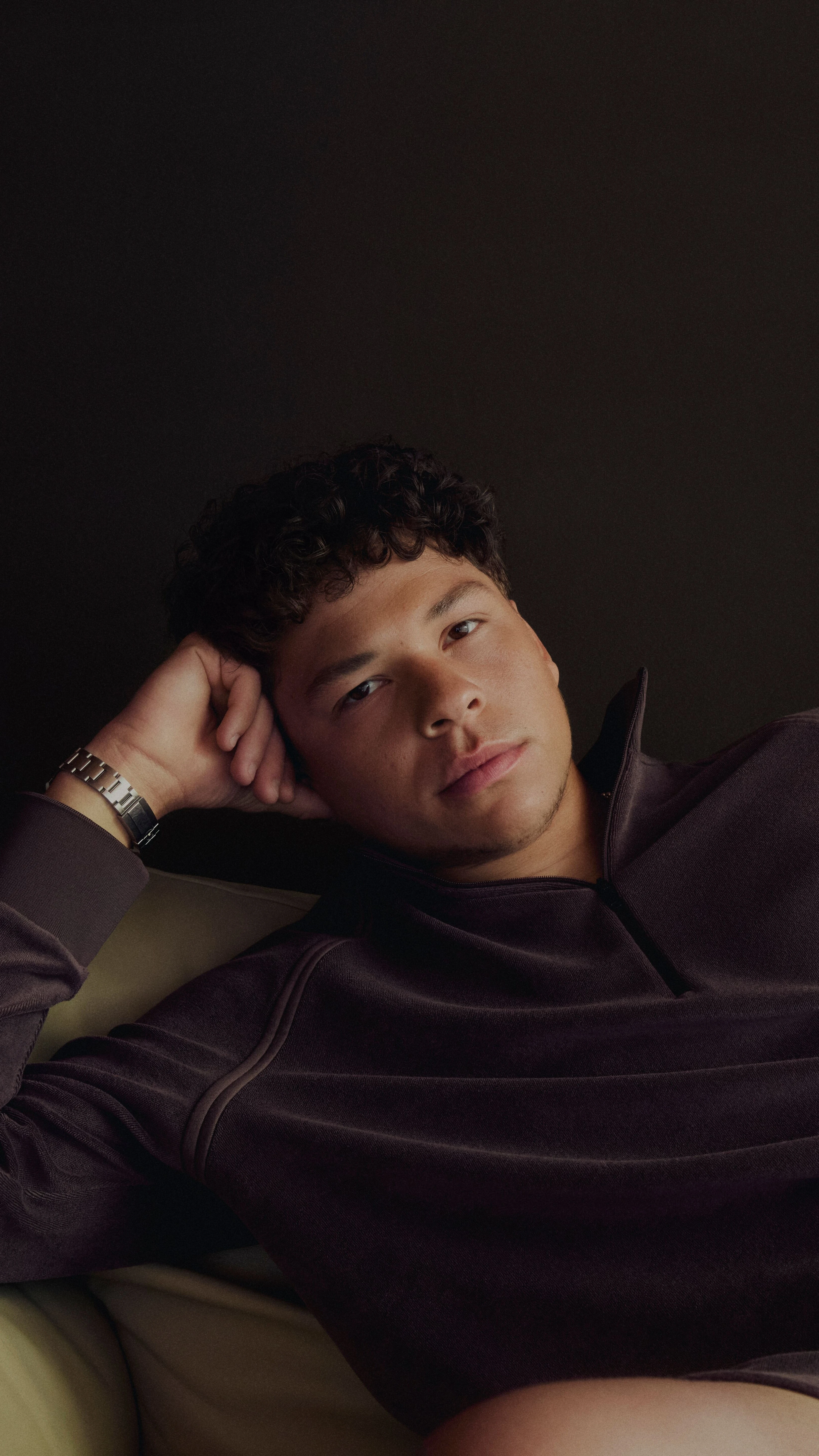
Ben Shelton’s Off-Court Routines
What happens off court shapes what happens on it. Here's how the American tennis player prepares for both.
For Ben Shelton, performance starts long before the first serve.
The 23-year-old American has become one of tennis’s most recognizable personalities. His serve has been clocked at 150mph (241.4 km/h). He celebrates loudly and talks to the crowd. Shelton plays with the kind of visible emotion that some athletes spend entire careers trying to suppress. A left-handed player who grew up inspired by Rafael Nadal, Shelton draws influence without ever feeling derivative. His game feels distinctly his own.
Away from competition, the picture becomes more nuanced though. The player who talks openly about having a “mamba mentality” also spends his downtime reading finance books. He prefers movie nights to loud parties and still thinks about how he treats security guards, tournament staff and the people around him.
Shelton seems to understand that intensity only works when it’s balanced by routine, recovery and through his relationships. The rituals that shape his tennis life are often surprisingly simple: a shower before a match, music before walking on court, time with family after a difficult loss, and wearing comfortable clothes while travelling between cities.
For Shelton, preparation is physical as much as it is psychological.
Rituals make the player
His routine begins the moment he wakes up. “The first thing I do on match day is take a shower,” Shelton says, insisting it isn’t a superstition. The shower is less about luck than rhythm. It’s one reliable constant before a day that can become unpredictable.
While his pre-match habits sound relaxed, they all build toward intensity. “My routines are all about getting fired up,” he says.
Somewhere between the shower, the hip-hop playlist and the walk toward the tunnel, his focus sharpens. Off court, Shelton comes across as easygoing and self-aware but once the ball is in play, he becomes one of the sport’s fiercest competitors. In 2021, he was ranked 1,829 in the world. By 2025, Shelton had risen into the ATP Top 10, reached a career-high No. 5 and collected five ATP Tour singles titles. The results are impressive. But what stands out is his ease during the ascent. Shelton carries himself with an absence of self-consciousness. He resists the robotic seriousness that can flatten modern professional sport.
Between huge serves and impossible gets, you’ll still catch him smiling, joking with spectators and drawing energy from the crowd. He’s not the kind of person who shrinks from the pressure or spends much time worrying about how he’s perceived. Emotion, for Shelton, isn’t something to conceal: it’s part of performance, and what allows him to play instinctively.
Perhaps some of that freedom comes from arriving later than many of his peers. Shelton only began taking tennis seriously around the age of 12. Even now, he approaches tennis as a work in progress, still discovering the kind of player he wants to become.
Maybe that’s the takeaway. The routines themselves aren’t complicated. If anything, Shelton’s example suggests the opposite. Consistency matters more than complexity.
Video Player is loading.
This is a modal window.
The media could not be loaded, either because the server or network failed or because the format is not supported.
Why downtime matters
Shelton understands that competitive intensity has its limits. Away from tennis, his interests are refreshingly normal. He spends time with friends, watches movies, reads, and listens to Afrobeats artists like Wizkid, Rema and Ruger. Although he left the University of Florida early to turn pro, he still plans to finish his finance degree one day.
There’s a maturity in the way Shelton talks about ambition. He’s driven, but not consumed by performance every hour of the day. He understands that recovery is not something that happens after the work; it’s part of the work. That balance matters on a tour defined by constant travel, pressure and visibility. The burnout can creep in. And for many athletes, the line between performance and identity becomes difficult to separate. He seems conscious of protecting that distinction between Shelton, the player, and Shelton, the person.
Off court, he rarely feels interested in building a mythology around himself. He tends to let his results and behavior do the talking. Humility appears in smaller moments: thanking staff, respecting opponents and recognizing the privilege that comes with playing at the highest level. That same player thriving in front of thousands of spectators and fans often seems happiest sitting in a cinema with friends afterwards.

Ben’s off-court style
Shelton approaches style the same way he approaches tennis: on his own terms.
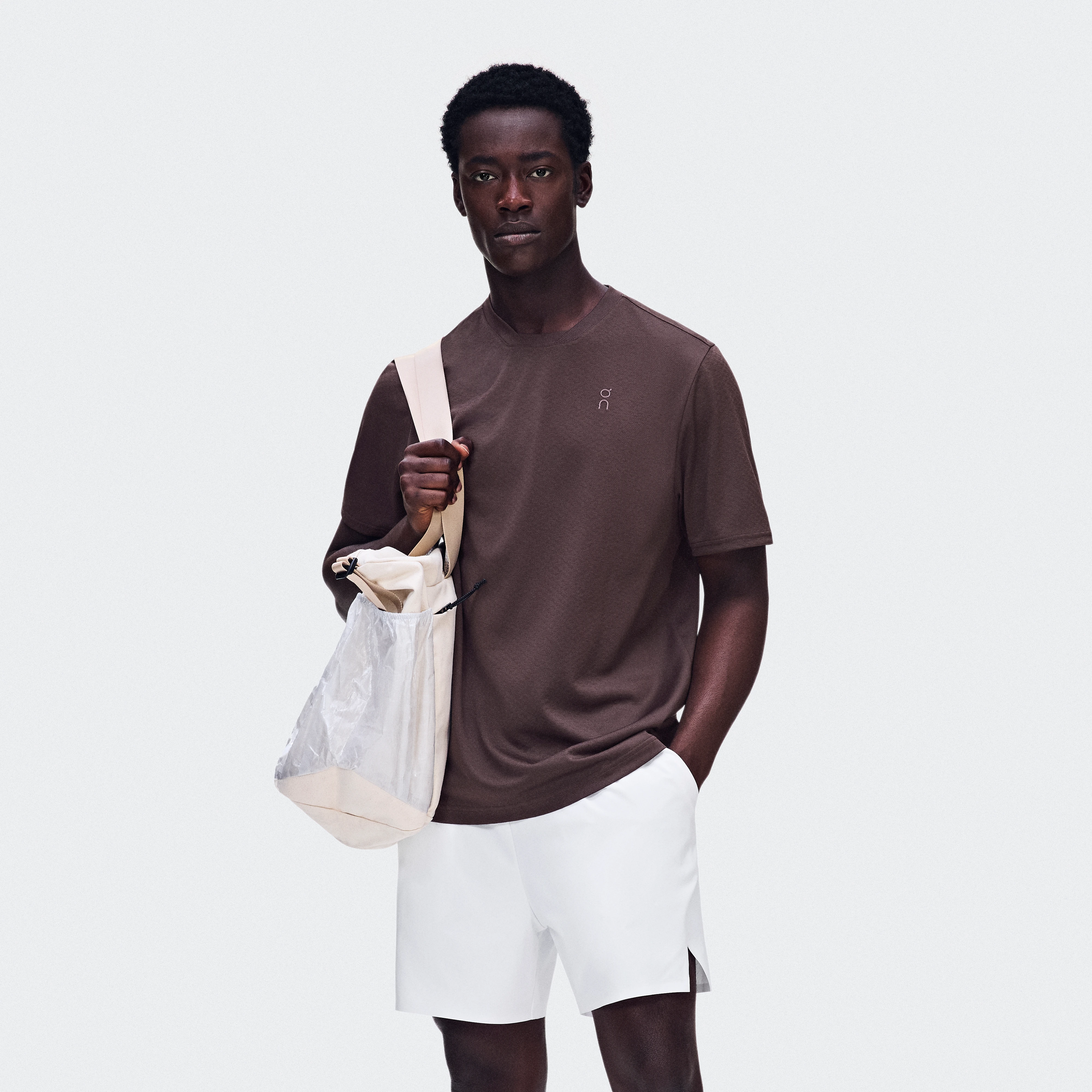
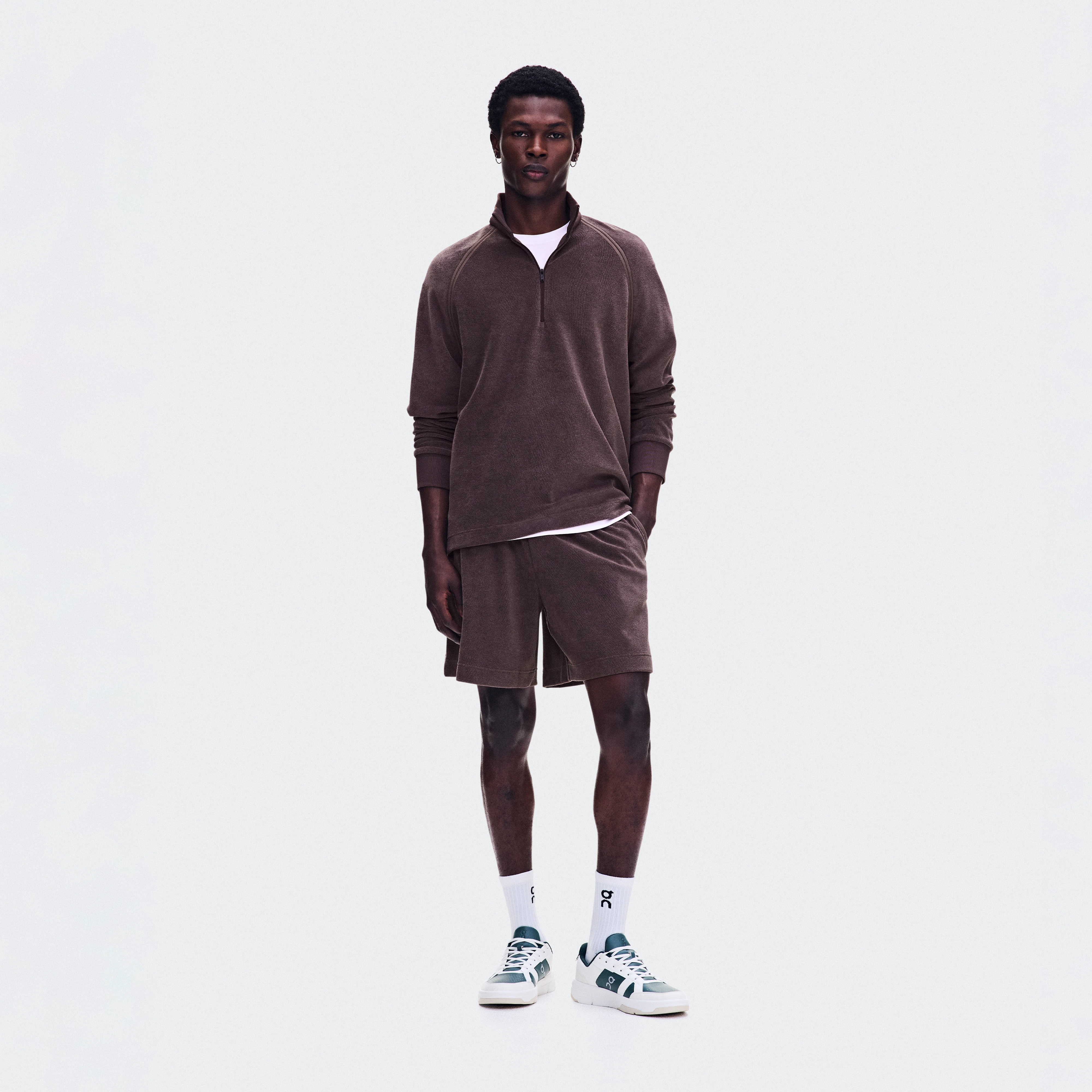
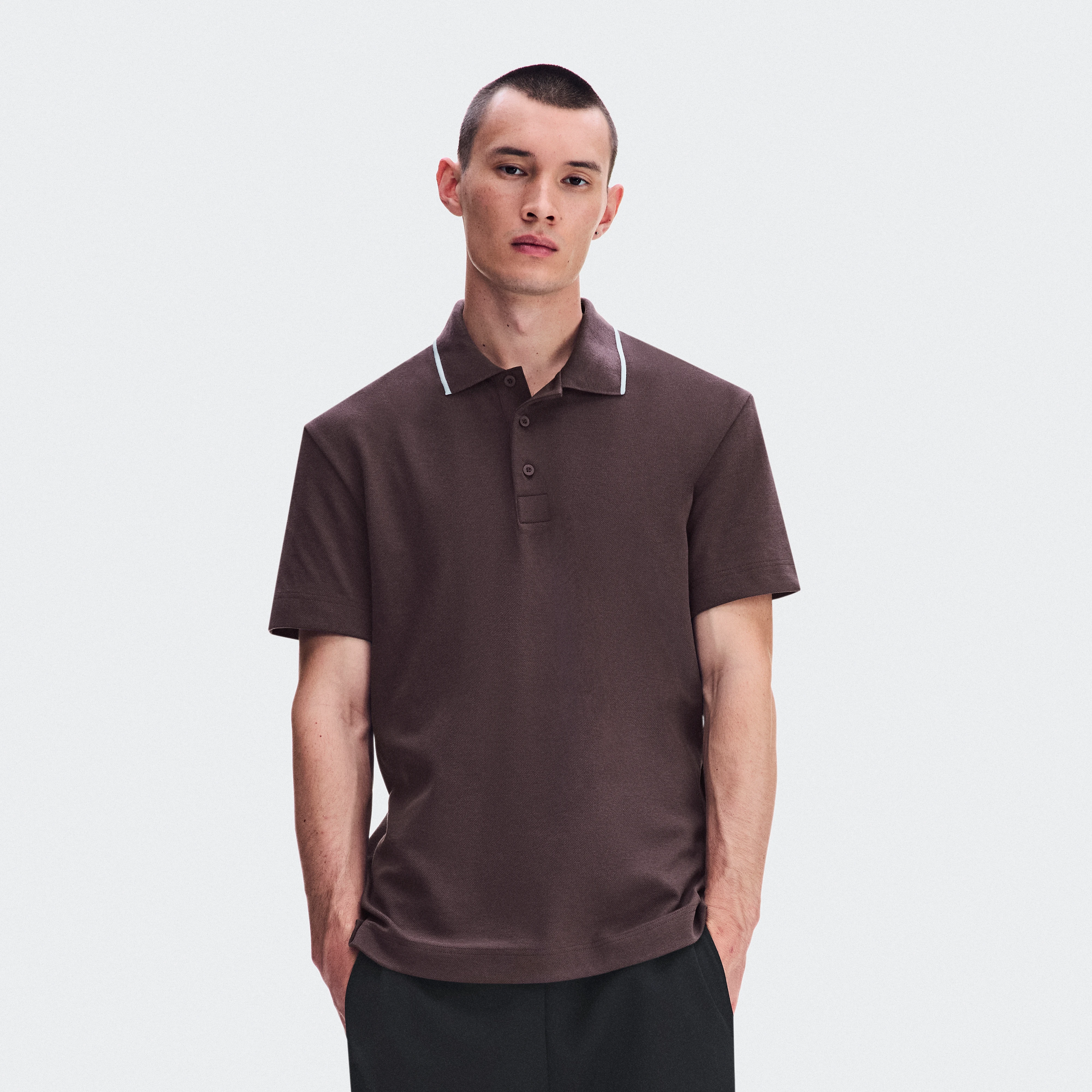
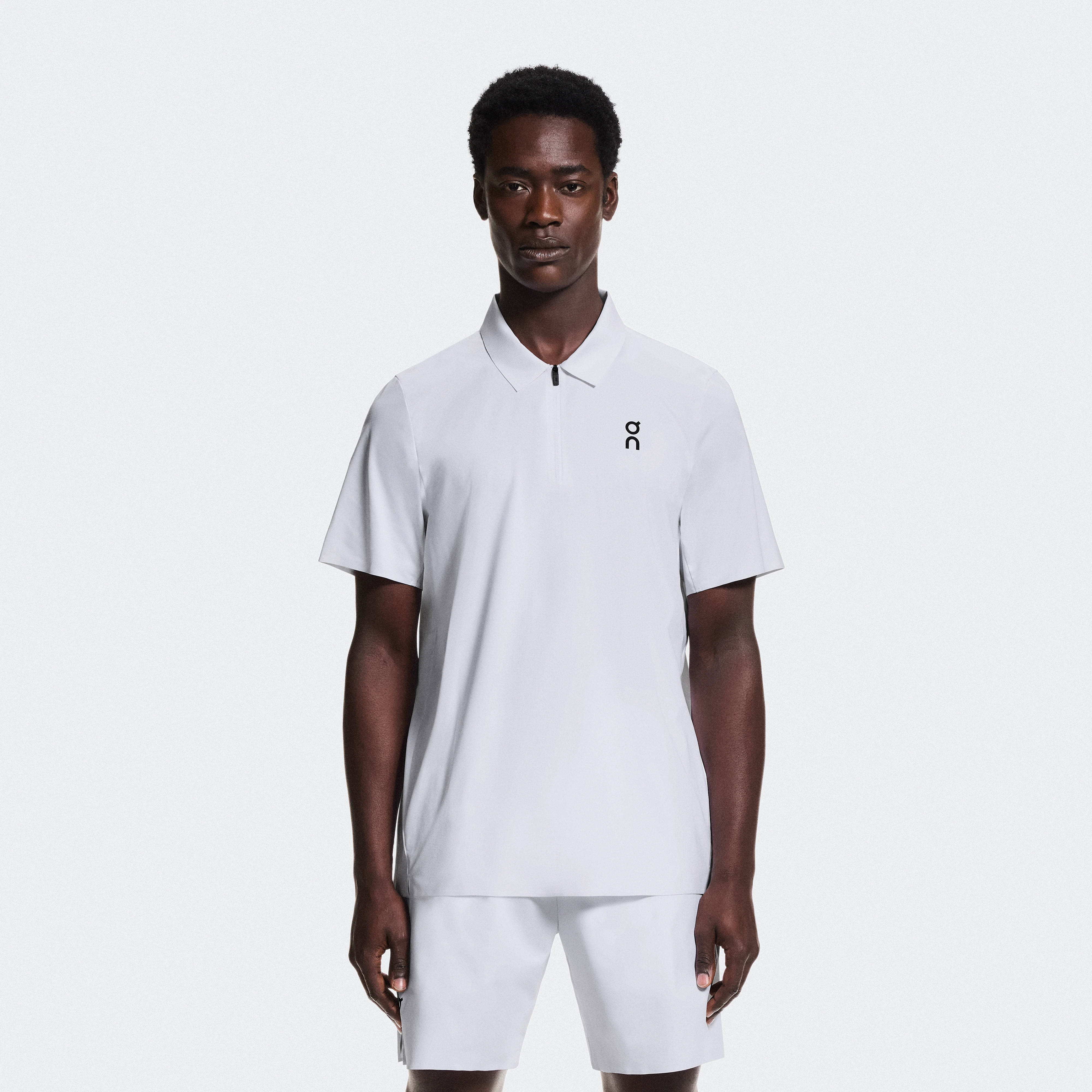
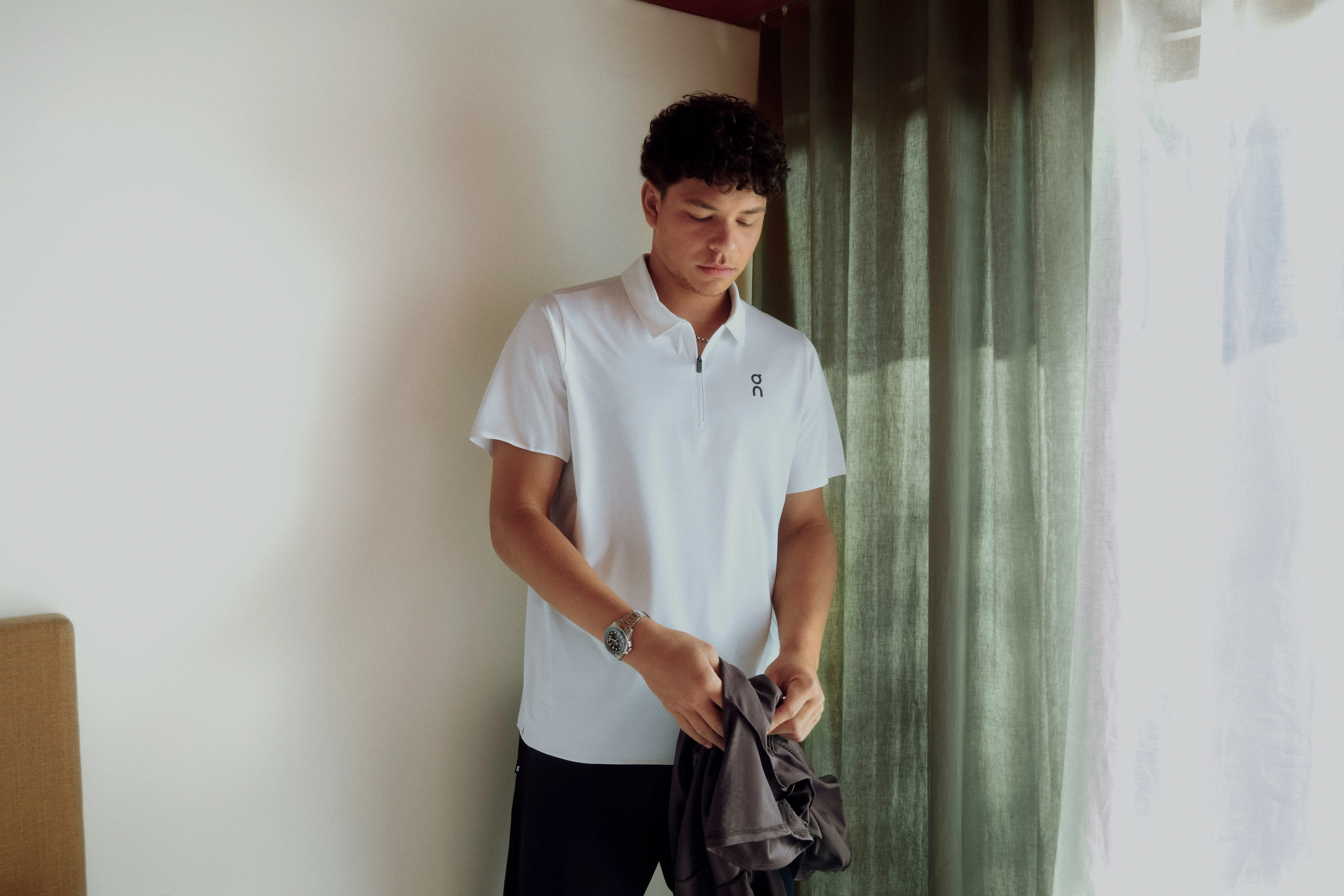
He belongs to a younger generation of players pushing tennis aesthetics somewhere looser and more expressive. One day that might mean layered chains and graphic tees. Another day it’s On’s Courtside Bomber – a textured varsity-style jacket designed for life around the court – or the Court Tank Graphic, made with breathable DryTec™ fabric and side slits for unrestricted movement. Shelton will be the only athlete who's wearing the Tank and Court Shorts Graphic during the US Open. The pieces sit within On’s Lights Out Collection – designed for, and with Ben – made to move beyond the court, to training, travel and everyday wear.
Comfort comes first, but individuality matters too. “There’s this great tradition and rich history in tennis,” Shelton says. “A lot of the brands other players are wearing – they don't make much outside of traditional clothes.”
Shelton has never seemed especially interested in blending into the mold of what a tennis player is supposed to look like. Growing up in Atlanta, he wanted to wear neon colours and grow his hair long. Today, he pulls inspiration from other athletes, music, social media and fashion.
The clothes matter less than what they represent: the freedom to show up as yourself. That’s one reason why he admires Roger Federer. “Roger is one of those guys who can do it all… on the court, off the court, at Wimbledon, at the Met Gala,” he says. The appeal is obvious. Shelton wants to become a better tennis player, but he also seems interested in a larger question around who he is beyond the game.
He’s someone who seems to have a growth mindset. “I’m competitive and I want to win but I have to remind myself that I’m nowhere near where I want to be with some things,” he adds. Still in his early twenties, Shelton is refining both his sport and his identity in real time, with a lot of witnesses.
The pre-match playlist
Before stepping onto court, Shelton reaches for music. When asked what he’s listening to before a match, the answer is simple. “Anything by Lil Baby,” he says. The music arrives at the same point in his routine every day: after the preparation, before the competition. It’s one of the last things he controls before a match begins. Music gives Shelton a way to narrow his focus before stepping into an environment designed to overwhelm it.
For Shelton, his sense of stability comes from routine, but also from people. Long before he became a fixture on the ATP tour, he was part of a college team at the University of Florida. That experience left a lasting impression. Tennis is an individual sport but college tennis offered a shared identity.
“It’s the only time in your life that you have a long-term team in tennis,” he says. “It’s an individual sport and can be a lonely sport.”
That sense of connection still shapes the way Shelton thinks about success. He talks often about family, teammates and the people who supported him before the rankings, sponsorships and attention arrived. He approaches competition with a strong awareness that his performances affect more than just himself. Whether it’s calling his girlfriend or family after a tough match, catching up with former teammates or simply sharing popcorn and slushies at the movies, his most meaningful relationships are remarkably ordinary.
The rituals and routines matter (and so does the music). But none of it exists in isolation. In a sport built around individuality and achievement, Shelton still seems most grounded by the people around him.