Low-impact HIIT workout: Train hard, protect your joints
Train hard without the strain. This low-impact HIIT workout builds strength and cardio (while keeping recovery top of mind).
HIIT is everywhere, for good reason. “It’s one of the most underrated yet effective training styles out there,” says On Ambassador and fitness trainer, Florencia Guarco. “It’s perfect for active recovery days, rehabbing an injury, some pregnancies or anyone who wants longevity in their fitness journey.”
Short, focused efforts followed by brief recovery can quickly deliver all the cardiovascular and metabolic benefits of traditional HIIT — without unnecessary stress on your joints. By focusing on controlled and functional movements, the intensity stays high while stress remains low, making HIIT more sustainable (and just as effective).
What low-impact HIIT actually means
Low-impact HIIT is high-intensity interval training without heavy landings. For Guarco, low impact means “reducing joint stress and not the intensity.” She says, “It’s about eliminating pounding movements like jumping but keeping your heart rate elevated and your muscles fully engaged.”
How it’s different:
- Less strain on joints: knees, hips and ankles stay protected - More control: focus on form and technique, not just speed - Faster recovery: intensity stays high without unnecessary fatigue
Guarco focuses on controlled, full-range movements, faster transitions, and strong time-under-tension work.
“Think of it as training smarter, not softer,” she adds.


Why gentle HIIT still gets the job done
Gentle doesn’t mean easy. “That’s one of the biggest misconceptions,” says Guarco. “It means safe yet efficient.” By taking out jumps, you have to work harder on muscle engagement and form. You’re in control of every rep.
“Personally, I’ve found that low-impact HIIT improves my mobility and recovery, and it keeps me training consistently without overuse injuries.”
Here’s why it works:
- Revs your metabolism: Intervals keep your system working during and after the session.
- Strengthens your heart: Controlled effort builds cardiovascular endurance with less stress on the heart.
- Protects your joints: Lower impact forces make it safer for recovery days or when you’re managing niggles to stay injury-free.
Low-impact HIIT is Guarco’s bridge between strength and endurance training. It’s what she uses on days she wants intensity – without overload. “It complements my lifting by keeping my conditioning sharp, and it supports my running by improving stamina and recovery. It’s the perfect middle ground. I can train hard every week without burning out.”
Whether you’re new to fitness or want a softer way to train hard, low-impact HIIT proves you don’t need impact to improve your fitness.


8 low-impact HIIT exercises to know
These moves are the foundation of any joint-friendly HIIT session. You don’t need any equipment, just bodyweight and space. Here are some low-impact moves that work multiple muscle groups while keeping impact to a minimum.
1. Marching high knees: Fires up the core and glutes without impact. Perfect warm-up.
2. Box squats: Strengthens your quads and hips using a chair or box.
3. Step-back lunges: Builds balance and power that protect your knees.
4. Modified mountain climbers: Focuses on your core and shoulders, but your feet stay grounded.
5. Standing side leg raises: Activates outer hip strength for better stability.
6. Bicycle crunches: Works your core and obliques, done at a steady rhythm.
7. Wall push-ups: Targets the chest and arms without the strain of floor push-ups.
8. Glute bridges: Activates the glutes and lower back with minimal stress.
And if you want to add a challenge with weight or bands, try Guarco’s go-to: a lateral step and squat to press. This exercise fires up the legs, glutes, and shoulders, challenges your coordination and gets your heart rate up fast.
A beginner-friendly HIIT routine to try at home
Not sure how to put it together? Here’s a simple 20-30 minute low-impact HIIT workout for beginners. Three circuits, no equipment needed, designed to elevate your heart without harming your joints.
Warm-up (3-5 minutes):
- March in place - Arm circles - Gentle leg swings
Circuits:
Round one (3 repetitions each)
- Marching high knees: 30s - Wall push-ups: 30s - Glute bridges: 30s - Rest: 30s
Round two (3 repetitions each)
- Box squats: 30s - Standing side leg raises: 30s - Bicycle crunches: 30s - Rest: 30s
Round three (3 repetitions each)
- Step-back lunges: 30s - Modified mountain climbers: 30 seconds - Rest: 30s
Cooldown (3-5 minutes):
- Walk in place - Stretch hips, hamstrings and shoulders - End with slow, deep breaths
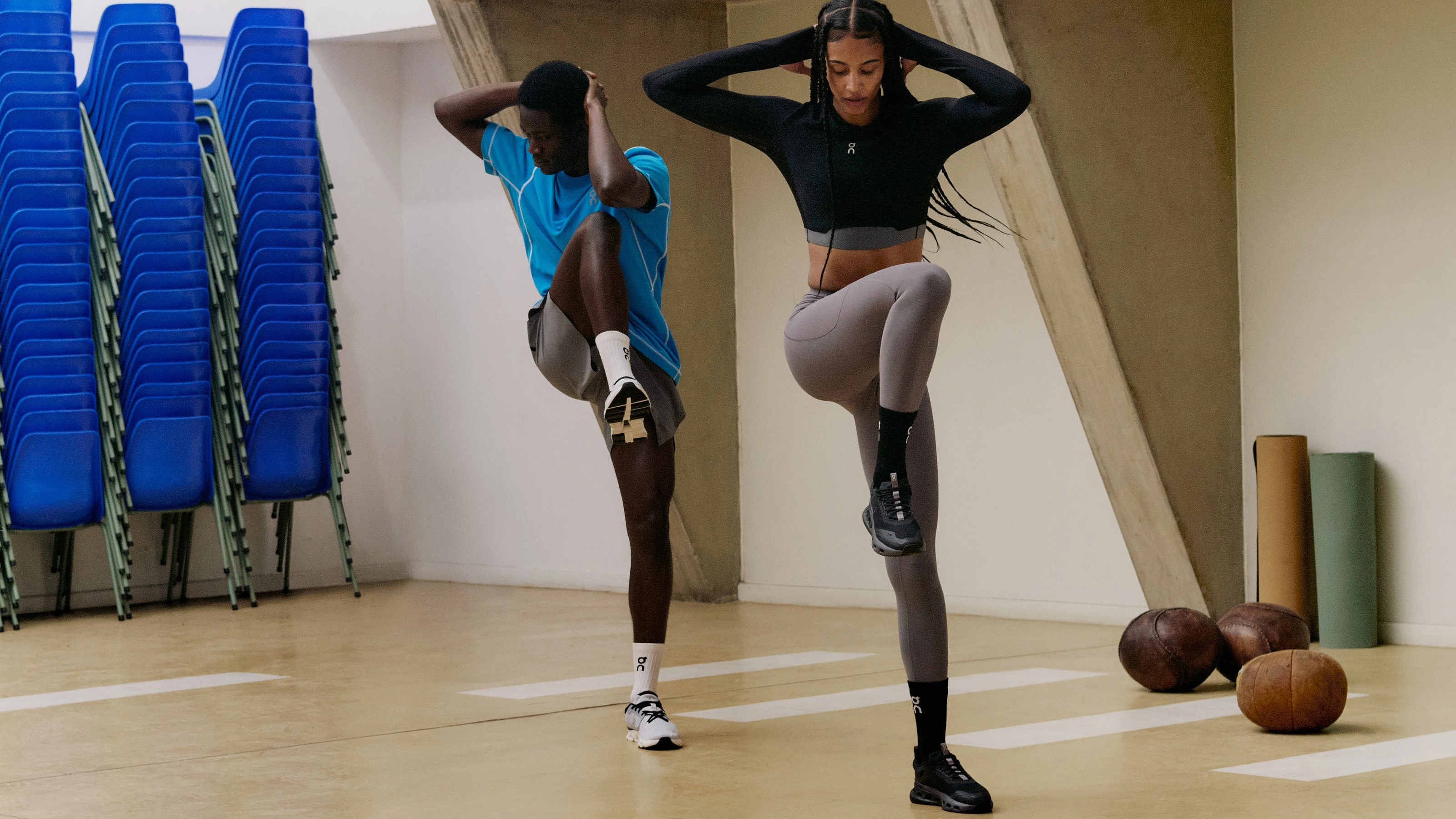
Own your next HIIT workout
Choose movements that lift your energy without straining your joints.
“I pay close attention to my breathing and form,” says Guarco. “If I’m breathless but still moving with control, I know I’m in that sweet spot. Intensity should come from effort, not chaos.”
Whether your training for endurance, strength or simply to move with ease, a low-impact HIIT workout is effective and sustainable. “You don’t need to jump or move explosively to make it count,” says Guarco.
“Focus on effort, not comparison. Track small wins: fewer breaks, smoother transitions, heavier resistance. Once you feel how powerful low-impact HIIT can be, the motivation takes care of itself.”