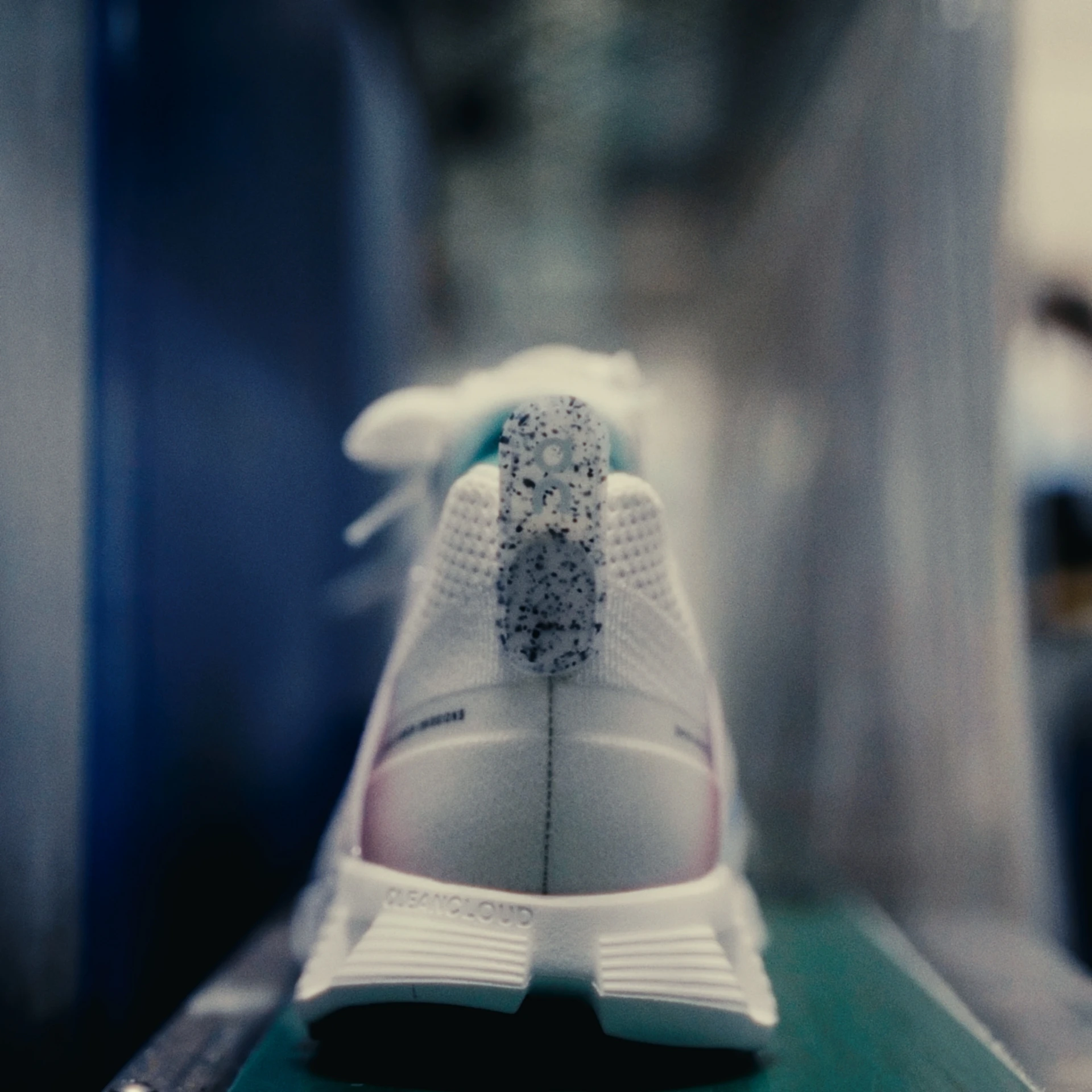
CleanCloud®
From pollution to performance. Turning carbon emissions into high-performance materials.
Video Player is loading.
Current Time 0:00
/
Duration -:-
Loaded: 0%
0:00
Stream Type LIVE
Remaining Time --:-
1x
- Chapters
- descriptions off, selected
- captions settings, opens captions settings dialog
- captions off, selected
This is a modal window.
The media could not be loaded, either because the server or network failed or because the format is not supported.
Beginning of dialog window. Escape will cancel and close the window.
End of dialog window.

Sustainability at On
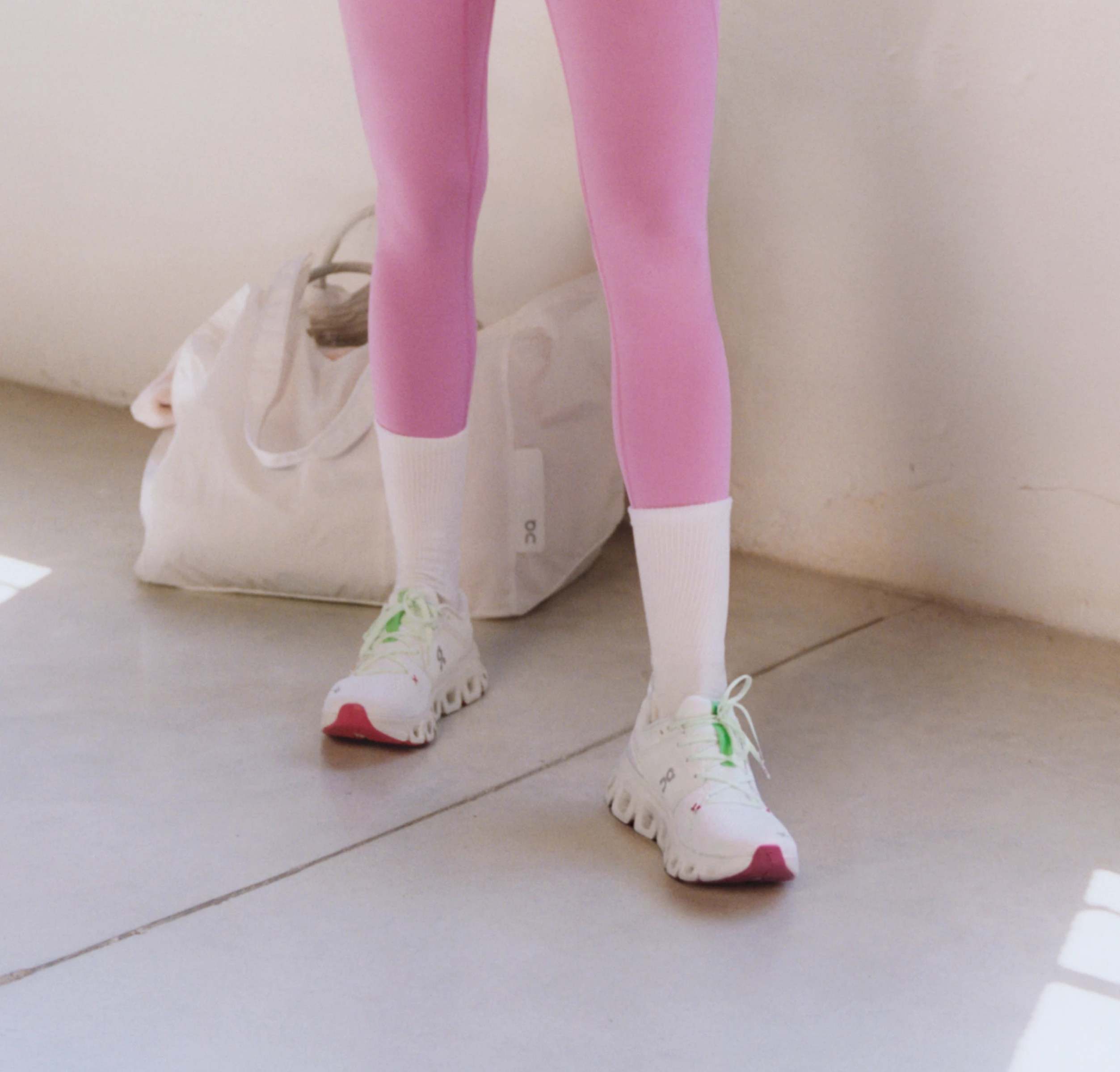
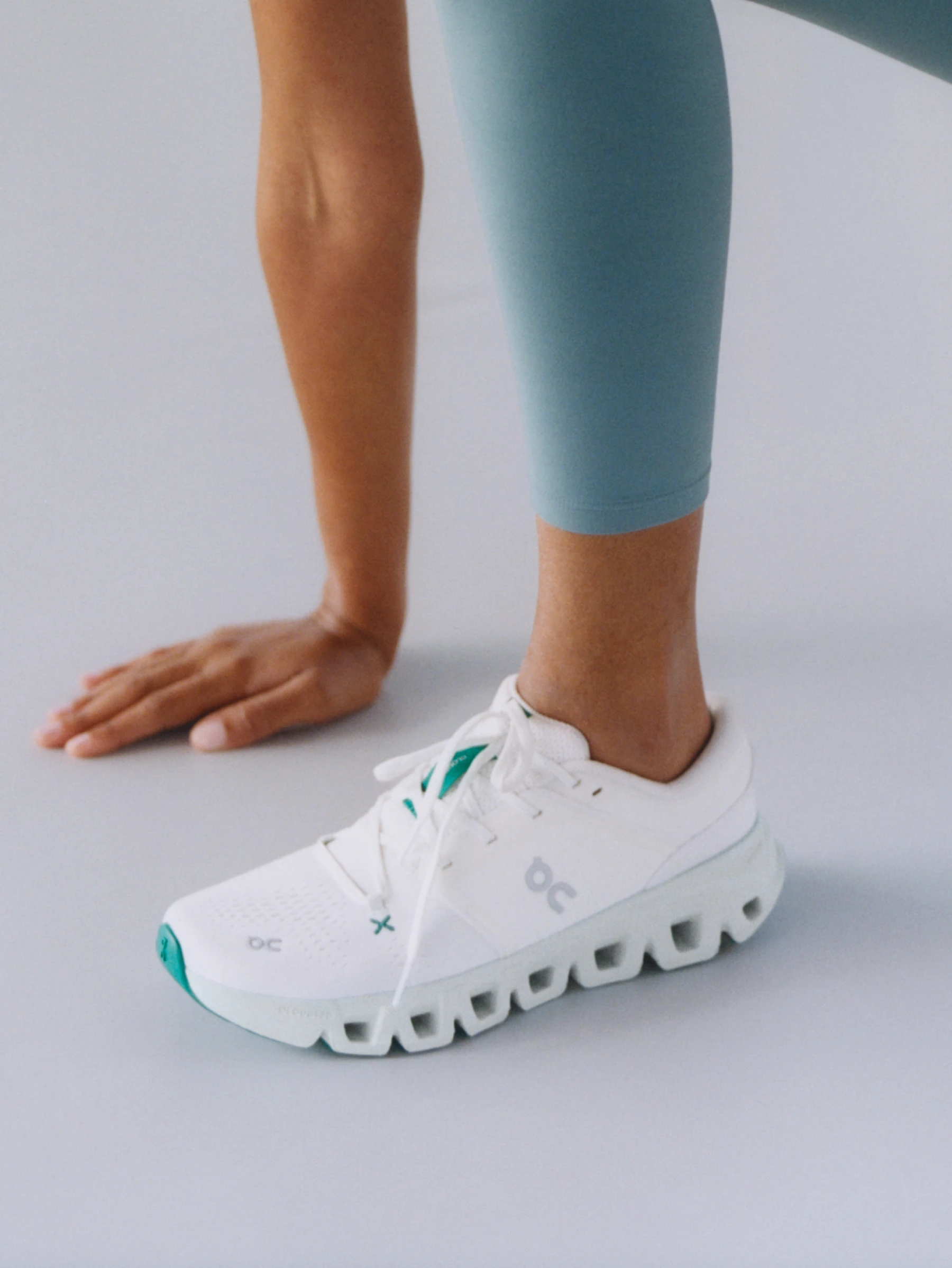
We’re on a mission to create high-performance products that leave less behind. CleanCloud® is our first step in bringing commercial carbon-capture footwear to the global market. But we’re only just picking up the pace.

Discover other technologies


Q&A:
No, and we believe in absolute transparency. The CleanCloud® EVA midsole compound in the Cloud X 5 contains roughly 48% attributed carbon-captured content. Think of making a shoe midsole like baking a cake – you need different ingredients to get the right structure: The Base (EVA): Makes up 67% of the overall midsole recipe (the remaining 33% consists of essential fillers, stabilizers, and colors). The Breakthrough (Ethylene): Standard EVA uses 72% petroleum-based ethylene. We’ve replaced 100% of that ethylene with our carbon-captured alternative. The Math: 72% (ethylene) × 67% (total EVA) = ~48% carbon-captured content in the final midsole compound.
We use a certified mass-balance process. With this chain of custody model we can track, trace and verify the sustainability of the feedstock materials throughout the chain to make it more visible and tangible.
Because captured carbon-derived feedstock is mixed directly with conventional fossil inputs in existing chemical plants, we don’t run separate, inefficient production lines.
This is identical to how green electricity works in the power grid: you pay for green energy to be added to the grid, which accelerates transition, even if the exact electrons powering your lamp can't be isolated. Mass-balance allows us to scale efficiency and utilize existing global infrastructure without building redundant factories.
CleanCloud is our internal standard for EVA, and we intend to roll it out as widely as possible. Currently, the only limiting factor is supply chain volume – specifically, the capacity of the captured carbon feedstocks from Infinium.
Because of this, we are prioritizing our most popular commercial styles, like the Cloud X 5, to potentially minimize our environmental impact. As supply capacities scale up, our utilization of CleanCloud will scale with it.
Our third-party LCA, conducted by CarbonMinds and critically reviewed by TÜV, assessed the cradle-to-gate impact of 1 kg of unpacked EVA copolymer. The assessment compared our new CCU-based EVA to conventional fossil-based EVA and evaluated the CCU-based material under two different accounting frameworks:
- Conventional Fossil-Based EVA (Pathway 1): The climate change impact is 3.12 kg CO2eq per kg EVA.
- CCU-Based EVA - Credit Approach (Pathway 2a): The impact is 0.4997 kg CO2eq per kg EVA. This is our primary calculation, as it is aligned with the "Together for Sustainability" (TfS) industry guidelines. This approach reflects a circular economy model by granting a "credit" for using captured carbon, which represents the benefit of avoiding the emission. This results in a modeled reduction of approximately 84% in greenhouse gas emissions compared to the fossil-based pathway.
- CCU-Based EVA - Cut-off Approach (Pathway 2b): The impact is 4.32 kg CO2eq per kg EVA. This alternative approach treats the captured carbon as a "zero-burden" raw material but gives no credit for its use. The resulting footprint is higher because it accounts for the energy-intensive processes of capturing and converting the CO2 without factoring in the benefit of emission avoidance.
These figures are based on a modeled Life Cycle Assessment and represent potential environmental performance. They should not be interpreted as verified product-level emission reductions. The full LCA and TÜV critical reviews are available here and here.
Both numbers are scientifically valid under ISO 14040/44, but they represent different accounting frameworks. Pathway 2a (Credit/System Expansion) is aligned with Together for Sustainability (TfS) guidelines. It burdens the CO2 generating industrial process with the climate impact and grants a corresponding CO2 credit to us for utilizing that captured gas as raw material. This represents the net circular economy benefit.
Pathway 2b (Cut-off) treats the captured CO2 as a zero-burden waste input but awards zero credits for avoiding the emissions of the original factory. Because CO2 capture and hydrogen production are highly energy-intensive, the lack of avoidance credits leads to a higher overall calculation of 4.32 kg CO2eq per kg EVA. This shows that accounting frameworks matter immensely, which is why we are transparently presenting both.