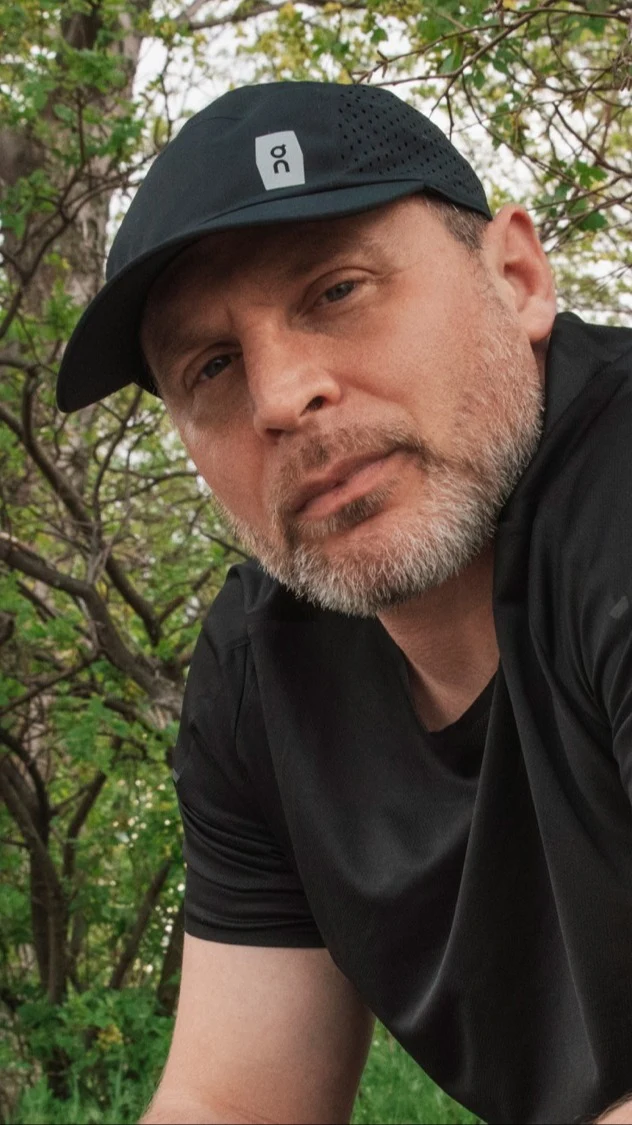
Transforming lives on the streets of New York
After Derek Drescher was pronounced dead, something within him decided to live.
Words by Moya Lothian-McLean. Photography by Mitch Zachary.
“There were a lot of times I didn't want to live any longer,” Derek Drescher says, frankly. “I hoped I wouldn’t ever wake up again.”
A few times, Derek nearly got his wish. In 2013, he had to be resuscitated following a heroin overdose. “I knew from that moment I was either going to change my life completely or die with a needle in my arm.”
Derek had struggled with substance abuse since 2006. Growing up, the native New Yorker’s childhood had been turbulent – the death of his beloved grandma, when he was 12, had a derailing effect. He stopped going to school, began stealing and experienced extended depressive episodes which culminated in him becoming homeless for the first time at 18.
Yet somehow he managed to scrape by, eventually securing a construction job that he loved. But manual labor meant he and his colleagues would get “dinged up a lot,” which eventually led to a prescription for pain management pills.
Soon, Derek stopped using the pills to alleviate his pain – instead, they fed his growing addiction. He had become one of the thousands of blue-collar American workers caught up in an opioid epidemic that would ravage lives across the country. When the crackdown on prescription medication caused shortages, resulting in painful withdrawal symptoms, Derek began using heroin. It was, he says, the beginning of a “pretty bad” time. But after his 2013 overdose, something shifted.
“[The drugs] didn’t work anymore,” he recounts. “They didn’t feel good. But I kept relapsing. I was in a halfway house and going to this place called the Center for Recovery. My counselor there straight up asked me: ‘Do you want to die?’
“I didn’t have a complete answer there and then. But I guess she saw something in me.”
Derek’s counselor put him in a cab, and several hours later, he pitched up at a detoxing facility in Yonkers in New York state. On the third day, he was given his last ever dose of opiates, methadone, administered by a nurse who blessed him.
“The next seven days were horrible,” Derek smiles. “But that was the last time I took anything.”
After 10 days spent detoxing, Derek was sent to a Samaritans Village outpost, this time back in New York City, right by Times Square.
This program was serious business, he says. Group therapy was four times a day, minimum, followed by one-to-one sessions. Participants had privileges which could be removed for being disrespectful to fellow residents. Chores were a big part of the day. Everything “had a consequence” there, Derek says. Initially he rebelled. “I was very disruptive in the beginning. I was in trouble a lot. I can really run my mouth. The doctors had also put me on meds that made me gain weight – and I started going bald – so I didn't feel good about myself.
“Then one weekend, 40 guys came back in from outside. They were sweating. Everybody was happy and smiling, and I was like ‘What’s going on, what the f*ck are you guys so happy about?’ They told me they’d just run 10 miles. I didn’t believe them. Run 10 miles? Nah, you walked.
“‘No,’ they said. ‘We ran 10 miles.’”
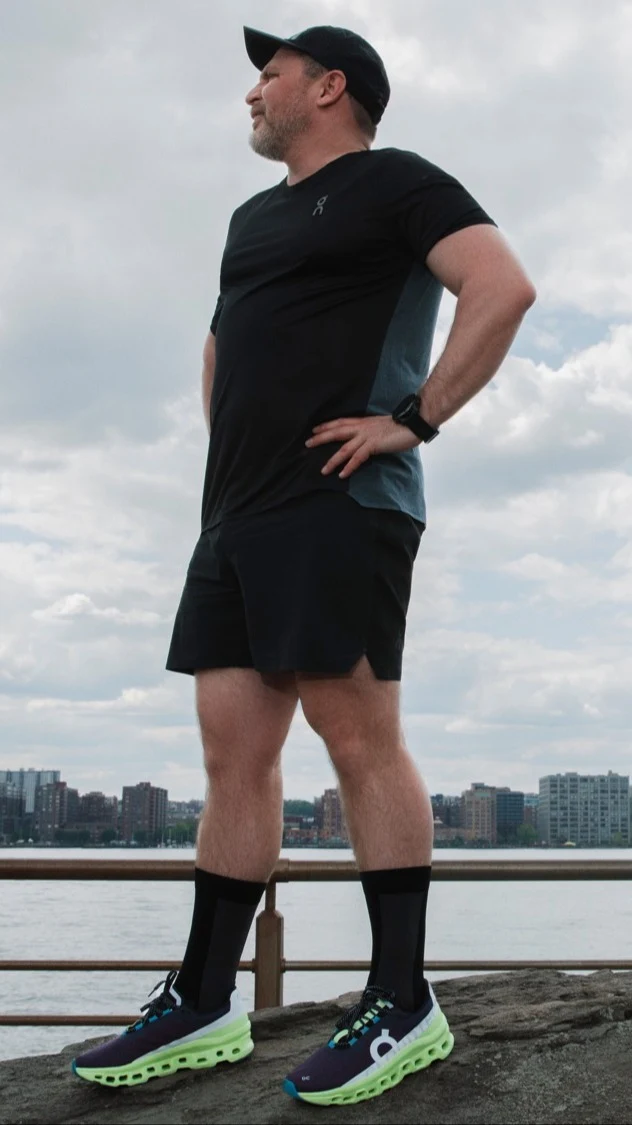
Derek’s roommate told him the group was called Back on My Feet and said he should join. Derek wasn’t keen – until he found out sign-ups got a pair of free sneakers.
“That’s why I did it,” he says. “For the free sneakers.”
Box-fresh sneakers on his feet, Derek turned up for the next Back on My Feet session at 5:30 a.m. that Monday.
“I go out there and everybody’s giving each other hugs,” he laughs. “What the hell is this? I’m like ‘Nobody hug me please, this is strange behavior’.”
His first mile took him 16 minutes.
“I told the [volunteer] to stop talking to me. I was like, ‘you’re trying to kill me. I can’t breathe’. We went through Times Square and I remember looking at the lights and praying they would be red so we could stop”.
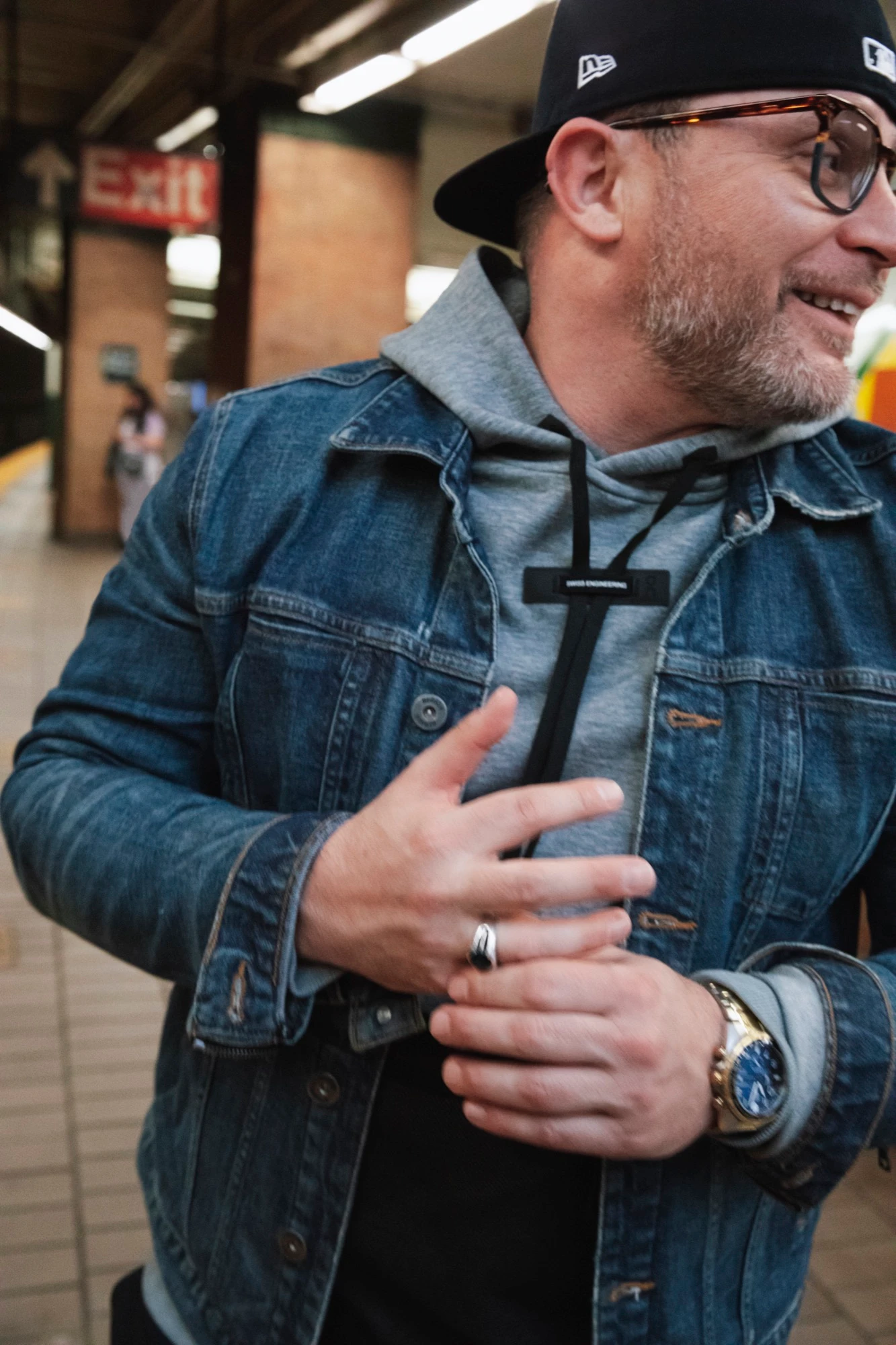
But still – Derek reluctantly found himself back outside the following Wednesday at 5:30am, ready to run.
“I can’t explain it,” he says, musing over his return. “I just remember the big circle of people and everyone smiling. Deep down, I’m like ‘I want this too’. I didn’t say that to myself [at the time], but that would be the only reason I would go back. Obviously something about the team made me want to be involved. It’s funny – I speak to people now and they’re like ‘I hated you when you first came. You were so f*cking mean’.”
Within a few weeks, Derek was hugging his fellow runners.
“I didn’t always understand what the word intimate meant,” he observes, of the change. “I thought it meant there had to be some sort of physical relationship going on, but I found out you can be intimate emotionally with people. I started becoming very close friends with all these people [I was running with].
“They knew me, I knew them. It turned into this beautiful thing.”
It also turned into 5Ks, then half-marathons. A year into the program, Derek got a job washing dishes, eventually working his way up to line cook and achieving his peer mentor qualification with the assistance of Samaritans Village, so he could work in a shelter himself. Back on My Feet was there all the way; as an alumni Derek kept running with the group and they continued to help with workshops, resume assistance and interview preparation. He also moved into his first solo apartment since getting clean.
“I didn’t think I’d ever experience something like that again,” he says, of signing a lease. “The few times I had it [in the past], I wouldn’t hold on to it. But the discipline and how good running made me feel trickled into the rest of my life. The biggest part was the community. They rubbed off on me in all the right ways. I was cooking for myself, cleaning for myself, putting in my 40 hours a week [at my job]. I felt like an adult, a human. I got a cat. I trusted myself enough to [look after] another animal.”
Shortly after he moved into his apartment, Derek ran his first New York City Marathon.
At mile 25 he started to cry, unsure if he would achieve his goal of finishing in under four hours. But he gave himself a pep talk. “Don’t cry,” Derek told himself. “You’ve given it your all. Save your energy for the last push.” He crossed the finish line in 3 hours, 58 minutes and 45 seconds.
Today, Derek works as an Alumni Member Services Specialist for Back on My Feet, overseeing the program for current team members and graduates. When the email for the job dropped into his inbox in 2016, he knew it was his to lose.
“I crushed that interview,” he says. “I knew more about the program than [the directors], and I’ve been here ever since.”
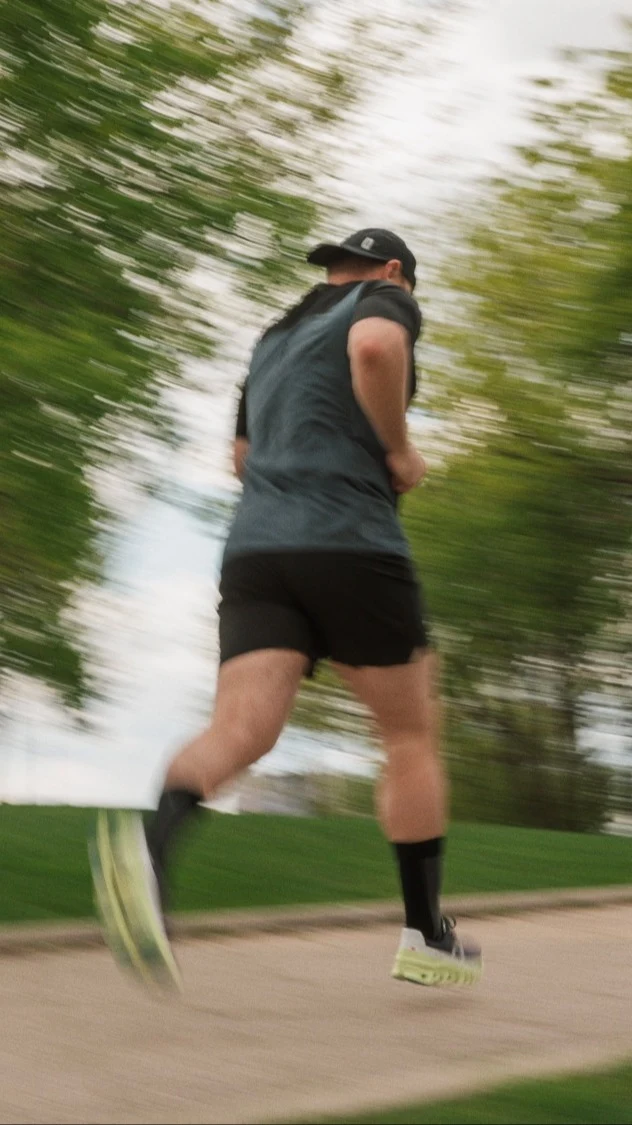
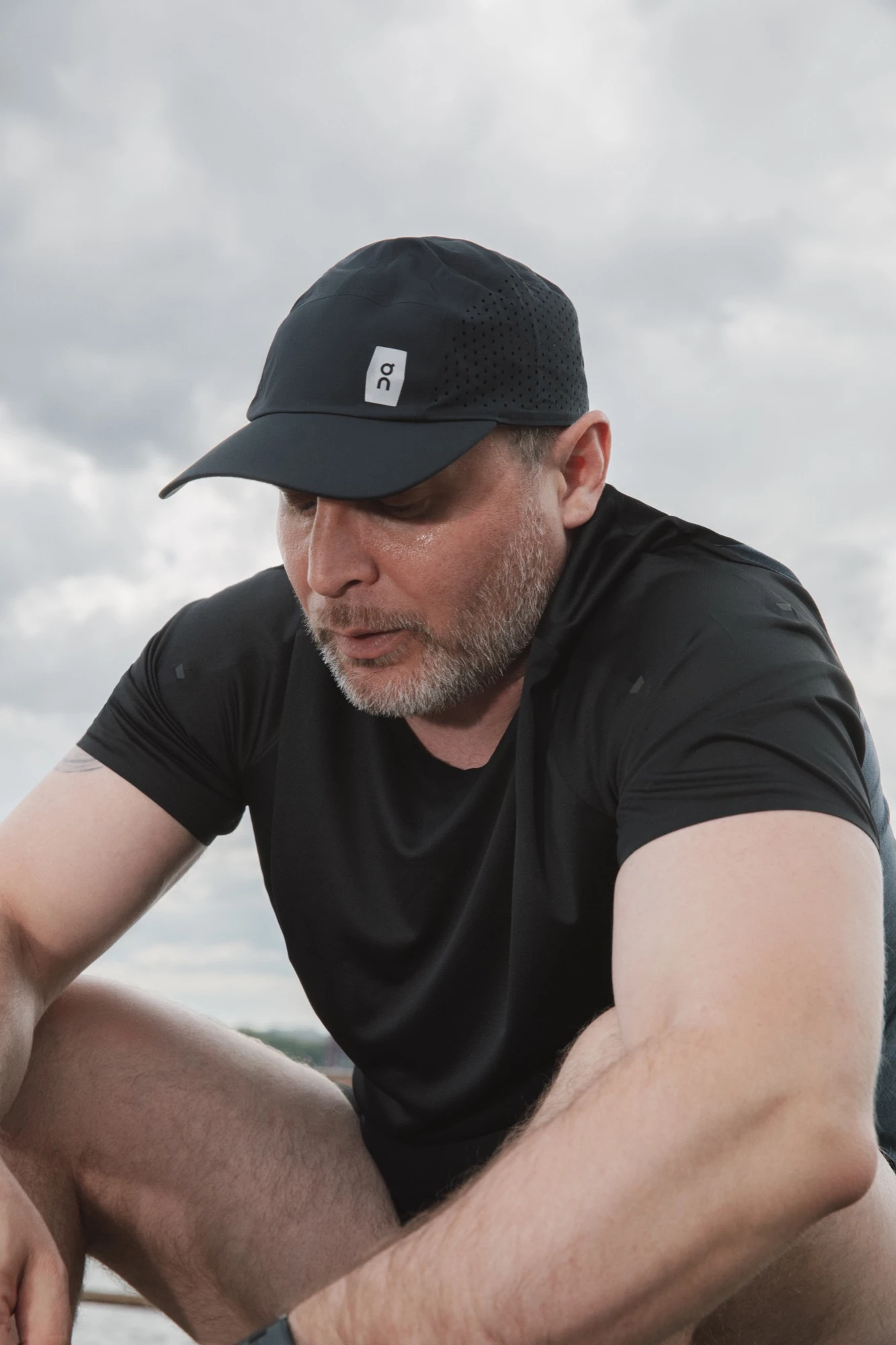
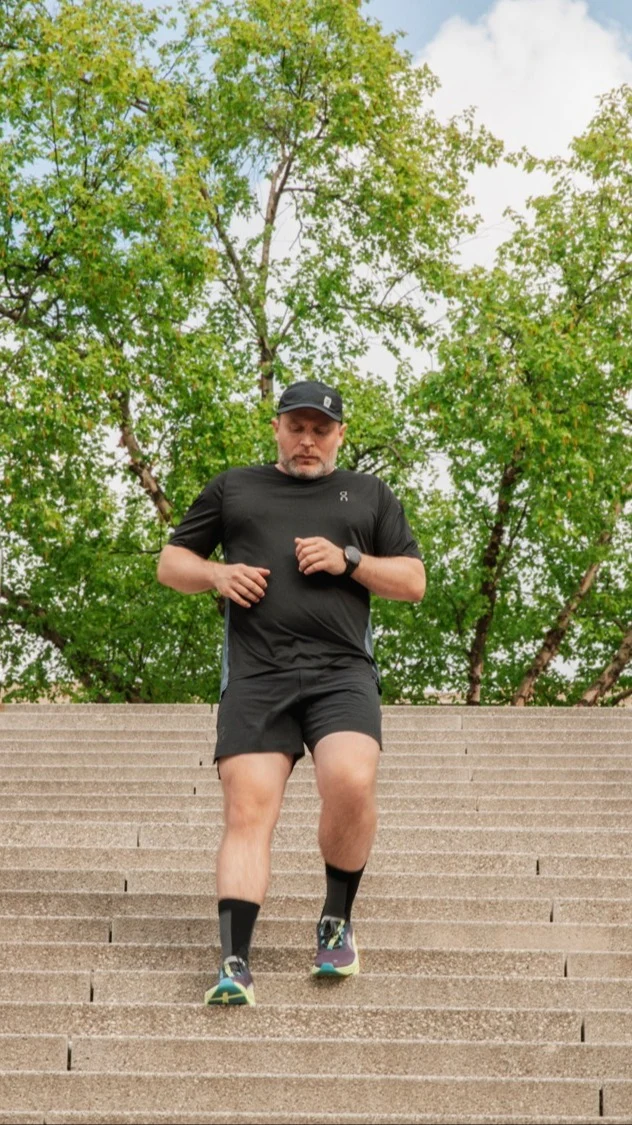
Derek doesn’t run as much these days, due to a bad knee. Only 10 miles a week, he says, shyly, running the soft tarmac route beside the Hudson River, listening to Wu-Tang Clan. But it still maintains his belief in himself.
“I wouldn’t be where I am today if Back on My Feet didn’t exist,” Derek says. “I never thought I’d be able to live a regular life, like anybody else. Whenever I run, there’s always this moment of ‘I can’t do this’ – it doesn’t matter if I’m running a five-mile route or a marathon, but when you hit your goal, it’s quite a feeling for someone like me who’s failed so much. It reinforces that I’m alive and I’m happy.”
“Now I know if I put my mind to something, I can achieve it. I believe in myself and love myself.”
Back on My Feet’s mission is to combat houselessness and addiction through the power of fitness, community support, and employment and housing resources. Right To Run has been working with Back on My Feet since 2021, providing shoes for members and financial support for their programming in 16 cities across the US.
Find out more about Back on My Feet and Right To Run.