Sparking change: The story of the Cloudspark sneaker
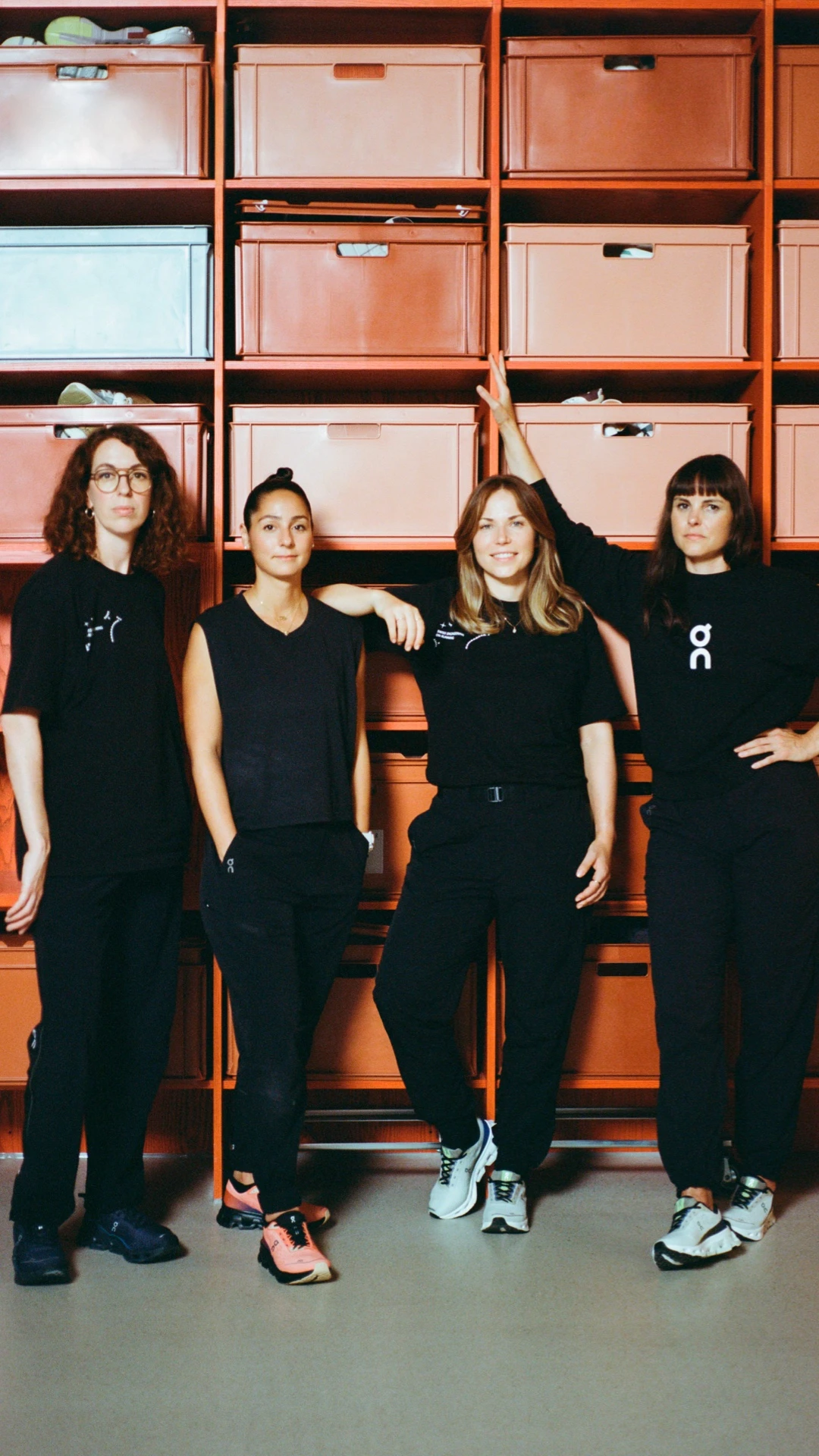
Ruth Heenan, Marieke Stasch and Meret Aebersold, from On's footwear product team, share the story behind the Cloudspark – the shoe designed with all runners in mind.
Words by Lucy Thorpe. Photography by Jameela Elfaki.
“We wanted to figure out what happens if you have a different starting post,” says Ruth Heenan, Footwear Product Management Lead at On. “How does it affect the whole journey of that product if we look at it from a different angle?”
Heenan, who collaborated on the development of On’s Cloudspark running shoe, is in the business of looking at things differently.
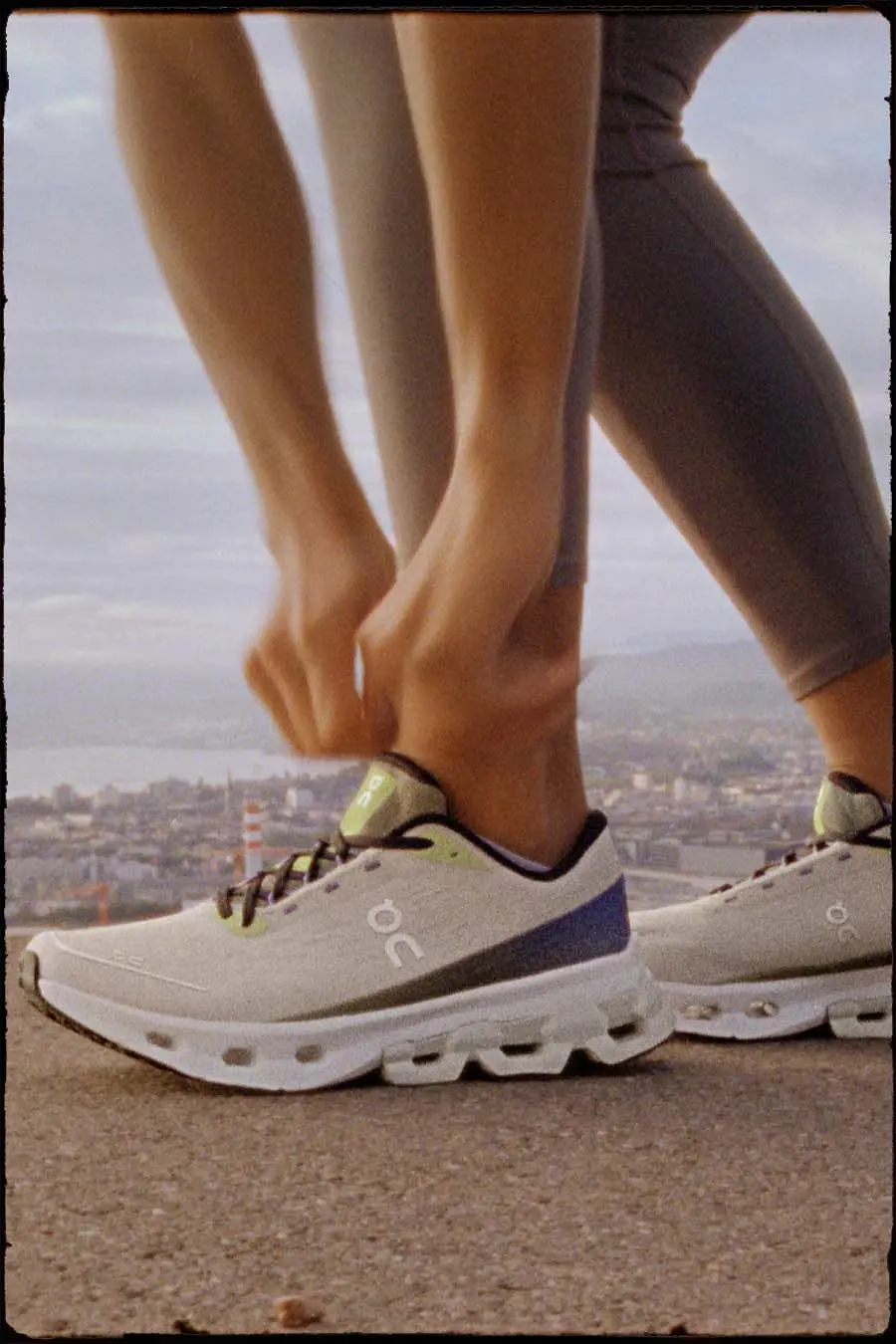
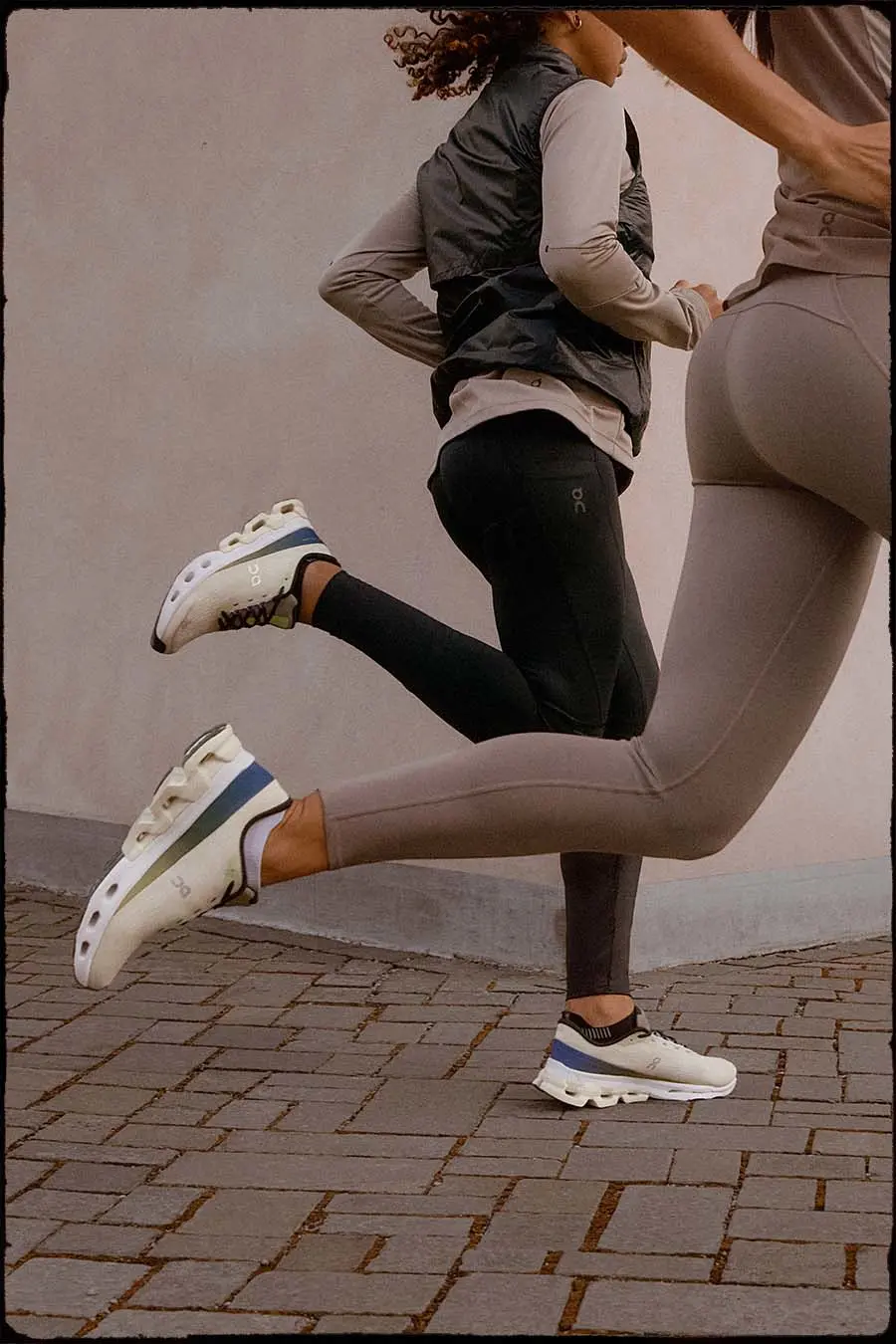
The Cloudspark flips the switch on a regular performance shoe. It's designed with more runners in mind. Instead of starting with cisgender men, the team looked at the biomechanics of many genders – starting with data from female physique – from the very beginning of the process. The result? A highly propulsive, functional shoe that can serve the needs of a broader scope of runners.
Women are running further, faster, and in greater numbers than ever before. They made up 44 percent of New York 2023 marathon finishers, 51 percent of weekly Park Run participants, and an estimated 1 in 4 ultra marathoners. Given the soaring numbers, it’s hard to believe that running shoes, the single most important piece of running equipment, are still designed almost exclusively on cisgender men’s feet.
In the award-winning book Invisible Women, Caroline Criado-Pérez opens our eyes to the profound impact of the gender data gap — the phenomena that most of the world’s data is deduced from cisgender men.
She examines in great detail how “[the] lives of men have been taken to represent those of humans overall” and why society continues to be constructed almost exclusively on the cisgender male experience. From safety tests to medical research, society’s biased approach to scientific research means “one-size-fits men” continues to be taken as “one-size-fits all.”
“How does it affect the whole journey of that product if we look at it from a different angle?”
The sports industry is no exception. Christine Wu explains in Up to Speed: The Groundbreaking Science of Women Athletes that “the research ecosystem isn’t built to accommodate multiple points of view. It’s designed to prioritize and support the understanding of male bodies and men’s performance. Biology and physiology become easy scapegoats.”
She explores how sports science research has focused on cis men athletes, using that information as the blueprint for everyone. Not only does this overlook much of society, but it also then measures them against standards they couldn’t influence in the first place. Some argue that this biased approach is simply an oversight due to a long-held assumption that all bodies are essentially the same excluding the reproductive organs. This opinion is hard to substantiate considering that it is these exact characteristics that lead to women being treated as inferior to men in sports, and cause them to be sidelined, snubbed, or excluded.
The repercussions of the gender data gap have impacted sports apparel and footwear, too. With the exception of a few early forays into women specific footwear during the fitness boom of the late 70s and 80s, running shoes have been designed on, and for, the male foot first.
If a shoe is also being offered to women, the men’s sample is graded down to smaller sizes. This is industry standard. All too often this size-extended range is differentiated with a stereotypically feminine color palette, giving rise to the tagline, ‘shrink it and pink it.’
The development of the Cloudspark at On is symptomatic of a crucial, collective seachange in the way that products are designed from their inception – other brands too are beginning to challenge this blanket unisex strategy, “Until now we've developed shoes from a male's perspective for everyone,” Heenan, says.
The Cloudspark’s development was spearheaded by Heenan, Product Manager Marieke Stasch, designer Meret Aebersold, and sports scientist Dina Weisheit. The process began with internal workshops, external female testers and working with Weisheit to look into data on women’s anatomy and running styles, to define the key elements of focus.
The team utilized data from 47,000 gait analyses and 1.2 million foot scans. They worked to identify three common factors that may inform the running style of female runners. Firstly, some female runners run in a slightly seated position. Secondly, they may need more powerful take-offs. Finally, they may have a tendency to over stride at high paces.
From there, the team developed a new last [a solid, foot-shaped form around which a shoe is constructed] based on over one million foot scans of male and female runners, noting that males and females tend to have different foot proportions and a different scale tendency from small to larger sizes. Once the last was ready, the team then began experimenting with the design in On’s workshop in Zurich. “Our workshop allows us to create tangible experiments. In the first step, we build prototype shoes, or “Frankensteins” as we sometimes call them because they're scrappy. But it’s not about appearance at this stage, it’s about the sensations we want to explore. And from that, everything else will flow,” explains Aebersold.
Several rounds of prototyping followed, each one tested by runners of varied abilities. From the geometry of On’s Cloud technology to the shape of eye stay and the padding around the collar, every element of the shoe was considered, reconsidered, tweaked and perfected.
Alongside quantitative data, the team also explored why women run. “The responses were so varied, there are so many reasons and motivations, and that played into our overall goal of building a shoe for everyone,” says Heenan. “We wanted a shoe that would conserve that feeling of, “ooh, that feels good. I feel fast, I feel propelled forward” — something which potentially you don't have as a beginner runner — into a shoe that is actually quite accessible.” The result is a great fitting, propulsive running shoe with a lightweight, breathable mesh upper and energy-enhancing bottom unit.
“The result is a propulsive running shoe with a lightweight, breathable mesh upper and energy-enhancing bottom unit.”
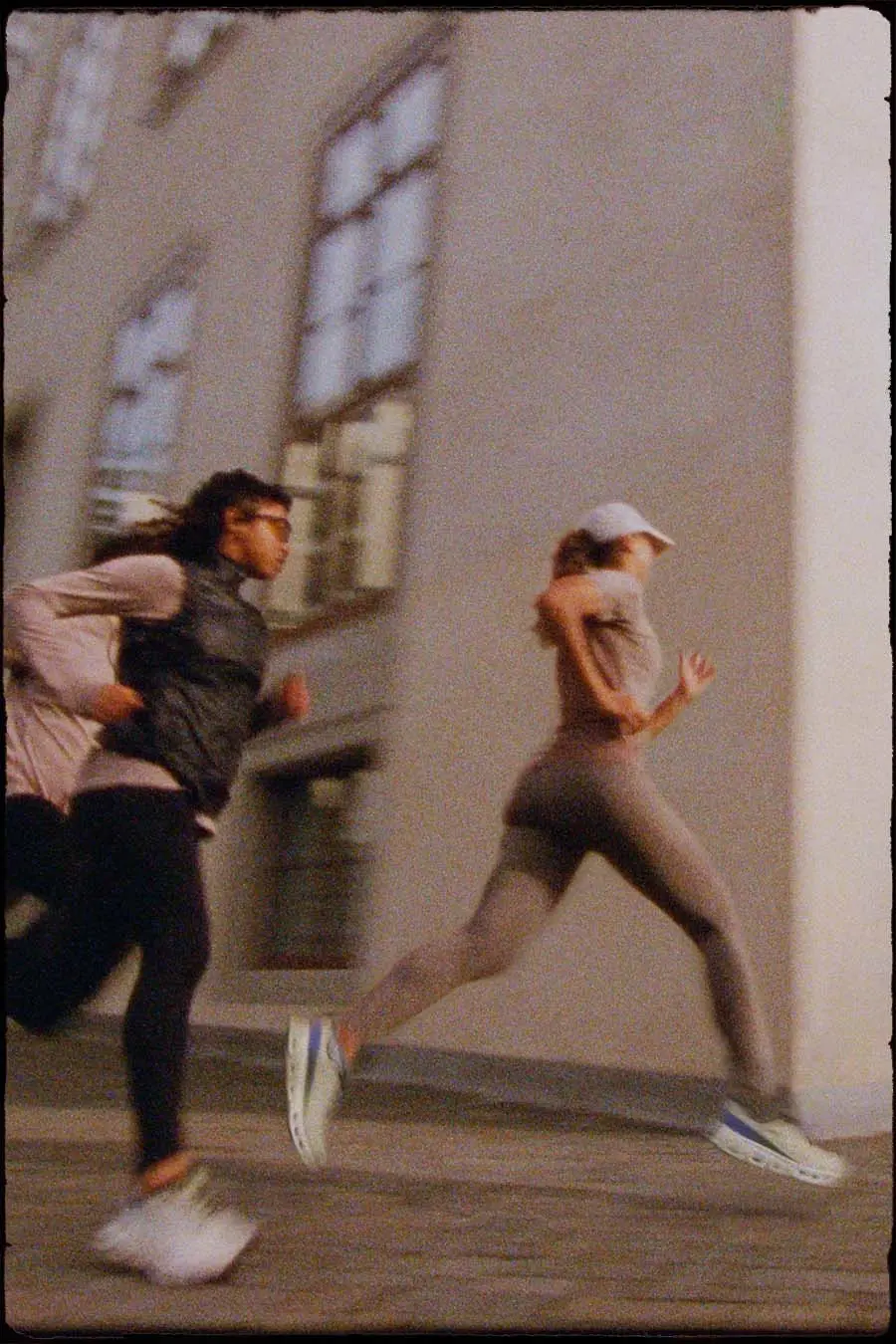
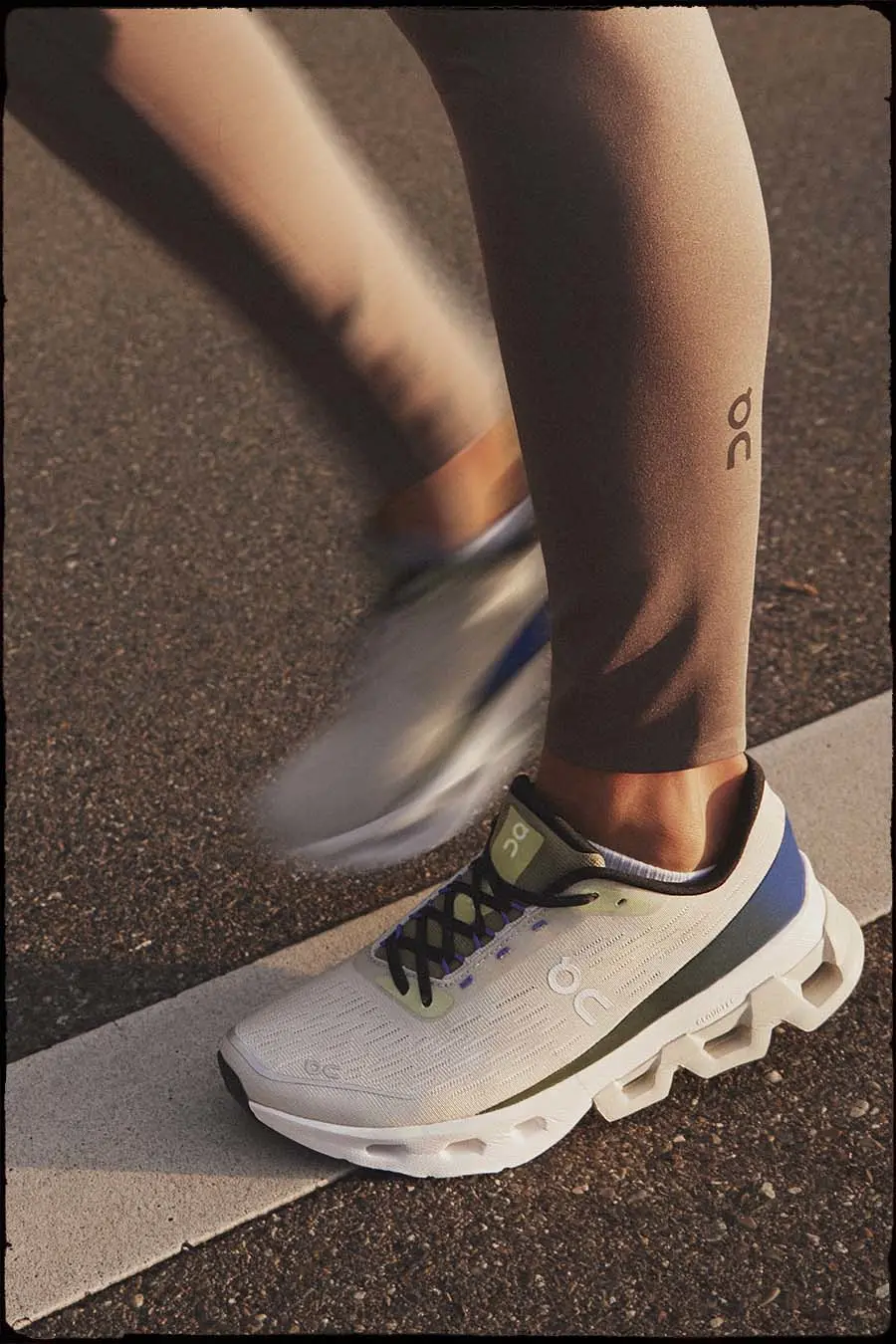
Once designed, the question was posed: Should a shoe designed on women’s data be offered in women’s sizes only and positioned as a women-exclusive running shoe?
On’s response – making the Cloudspark available to everyone, stays true to the ethos of its inception – a reaction against the industry norm of gendering access to footwear.
“Bodies are so diverse that it's also not fair to [limit sizing]. There will be others who’ll appreciate such a shoe as well,” says Stasch.
As the name suggests, the Cloudspark has illuminated the team on what it really means to design inclusively. “We have a much more rounded view when it comes to testing and development across all of the projects,” says Stasch. “From now on, we will be way more conscious of certain data gaps that can cause an invisible bias in product design.”
On has committed to creating an equal amount of new shoes on women, and on men sample sets. This means that half of the new shoe developments will start in size USM10, and a men’s last, and half of them from a USW7.5, and a women’s last. This gives a more equal approach to who tests the first prototypes, whose voice must be heard to validate the design and, ultimately, guarantees a more inclusive footwear offering. And we’re just getting started.
Aebersold nods towards continual progress in this space, “It's great to see our product palette grow for the specific needs of diverse body types and runners.”