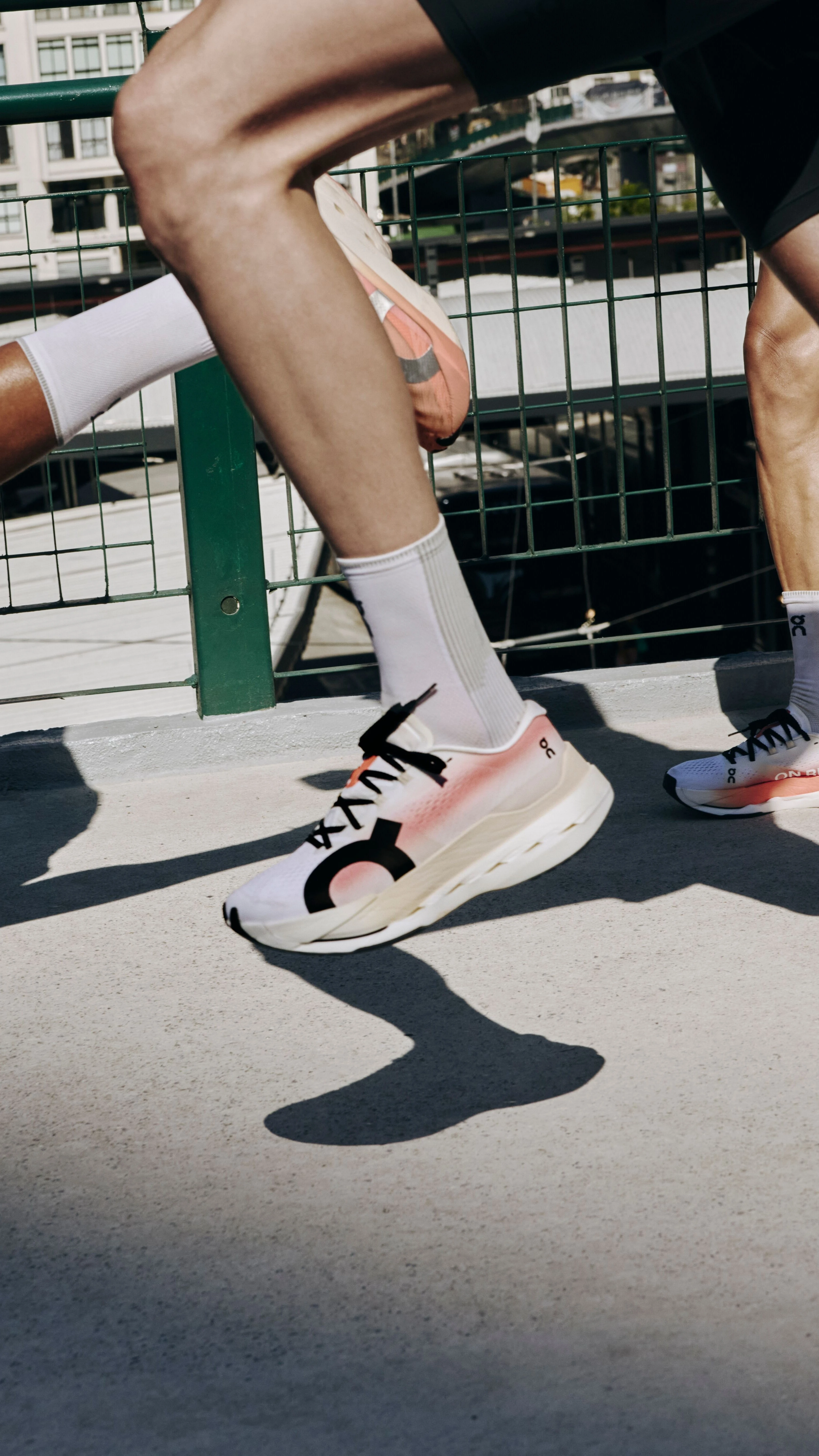
The 5 best marathon shoes, according to On athletes
Finding your rhythm in the long run starts from the ground up. Supported by insights from our athlete ambassadors, this guide shares the best footwear for marathon training and race-day.
The marathon starts before the starting gun. It’s built through early alarms, long runs, recovery days and the consistency of training week after week. And the shoes that carry you through those miles matter.
The best marathon shoes help you feel fast, but they also support your stride when fatigue sets in. They protect your legs against high-mileage weeks and injury.
Our selection brings together On’s key marathon models, shaped by athletes' insights and real training demands of marathon prep. From highly cushioned trainers for everyday mileage to race-day shoes engineered for speed and energy return, each pair serves a different purpose within a marathon build.
Whether you are preparing for your first marathon or chasing a personal best, the right shoe should feel like an extension of your running style. Not every shoe here will work for every runner – that’s precisely the point.
5 best marathon running shoes
Finding the right shoe to train for a marathon depends on your specific pace, goals and experience level. The table below compares the top On marathon shoes designed for different moments in your training journey – from high-mileage training, workouts to race day.
Model | Best for | Key Features |
Race day innovation | Approx. 170g LightSpray™ upper created from a single, continuous filament for a seamless, lace-free fit Uses carbon-fiber Speedboard Helion™ HF hyper foam for maximum energy return and impact protection | |
Race day performance | Helion™ HF hyper foam for elite-level energy return and soft landings Spoon-shaped Speedboard® helps drive a forward-rolling sensation One-piece mesh upper for breathable, secure lockdown | |
Speed training and shorter races | Dual-layer Helion™ HF delivers responsive cushioning and energy return Carbon Speedboard® supports efficient, propulsive strides Breathable mesh upper helps regulate heat during harder efforts | |
Training and everyday mileage | Triple-layer CloudTec® cushioning for a high-cushioning ride Enhanced rocker shape supports smooth heel-to-toe transitions Helion™ superfoam balances energy return with year-round durability | |
Training – with more propulsion and race day feel | CloudTec® cushioning system engineered for fast runs Double layer of Helion™ HF hyper foam for energy return Glass fiber-infused Speedboard® for efficiency and support A lightweight, breathable mesh upper |
Race day marathon shoes
Built for the start line, these marathon shoes prioritize speed, propulsion and efficiency under fatigue. Responsive Speedboard® technology and Helion™ HF hyper foam work together to support smoother transitions, energy return and impact protection across 26.2 miles.
1. Lightspray Cloudboom Strike
Best for: Race day innovation
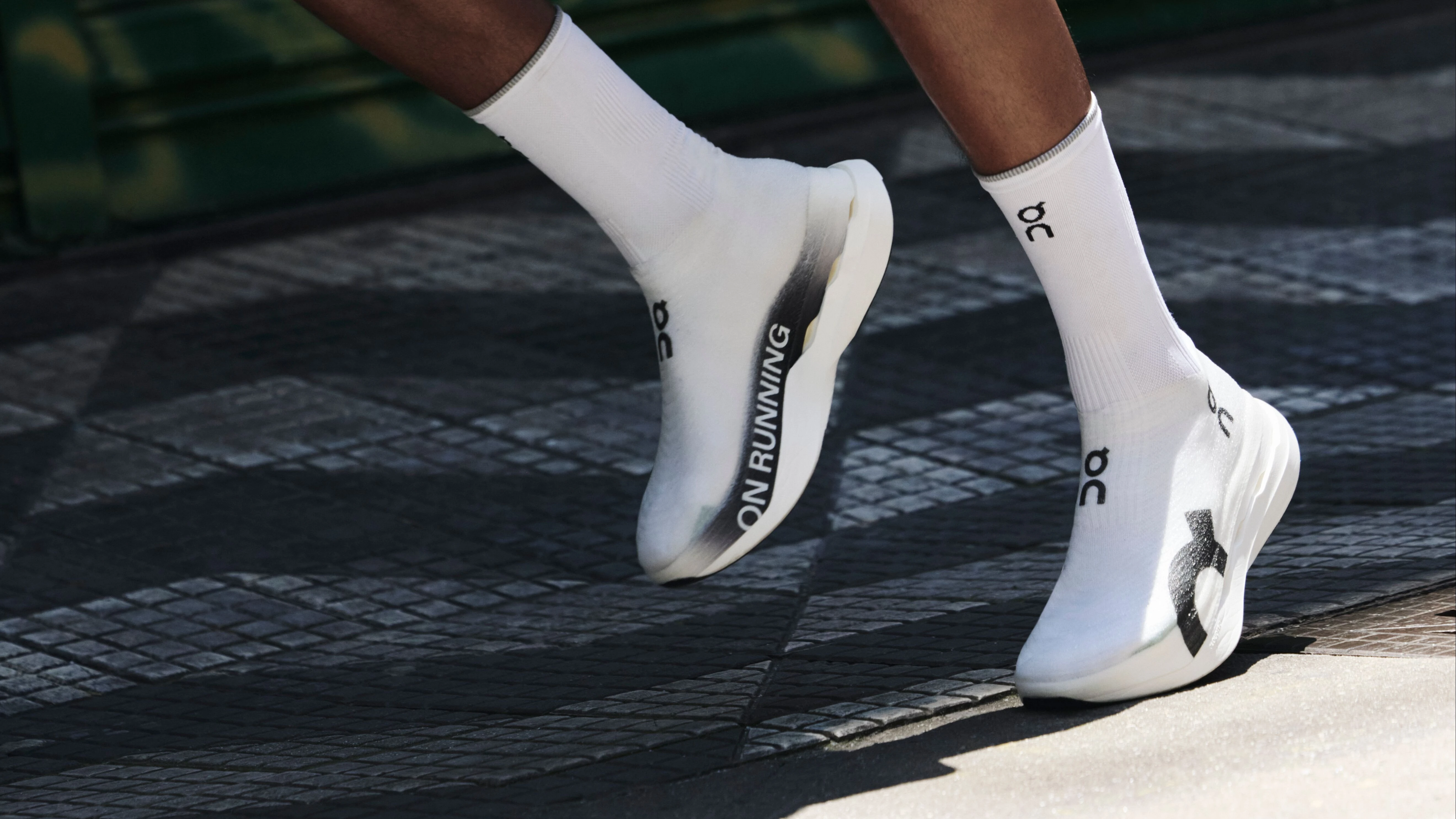
The Lightspray™ Cloudboom Strike experiments with race-day design.
Instead of multi-part construction, the upper is sprayed in a single continuous filament directly onto the midsole. The result is seamless, ultra-light and precise, fitting like a second skin and removing friction and distraction.
Compared to more traditional uppers, Rufino Paniza, an On ambassador from Spain, notices a more direct connection with the shoe and “a clean feeling through transitions.” He says “it adapts well to the foot while still feeling secure, especially at marathon pace and during faster efforts.”
By removing seams, glue and laces, the Lightspray™ has no unnecessary structure. “The fit feels natural and precise, almost like the shoe disappears on your foot once you start running fast,” adds Panzia.
It’s lighter than the standard Cloudboom Strike, a powerhouse for marathon training and race day. The Lightspray™ edition pushes innovation further with a seamless, laceless fit designed for race day.
What it’s best for | What to know |
|---|---|
Race day performance | Released in limited, high-demand drops |
Weightless speed | Lace-free upper creates a precise, second-skin fit |
Seamless comfort | Optimized for road racing and paved marathon courses |
2. Cloudboom Strike
Best for: Race day durability
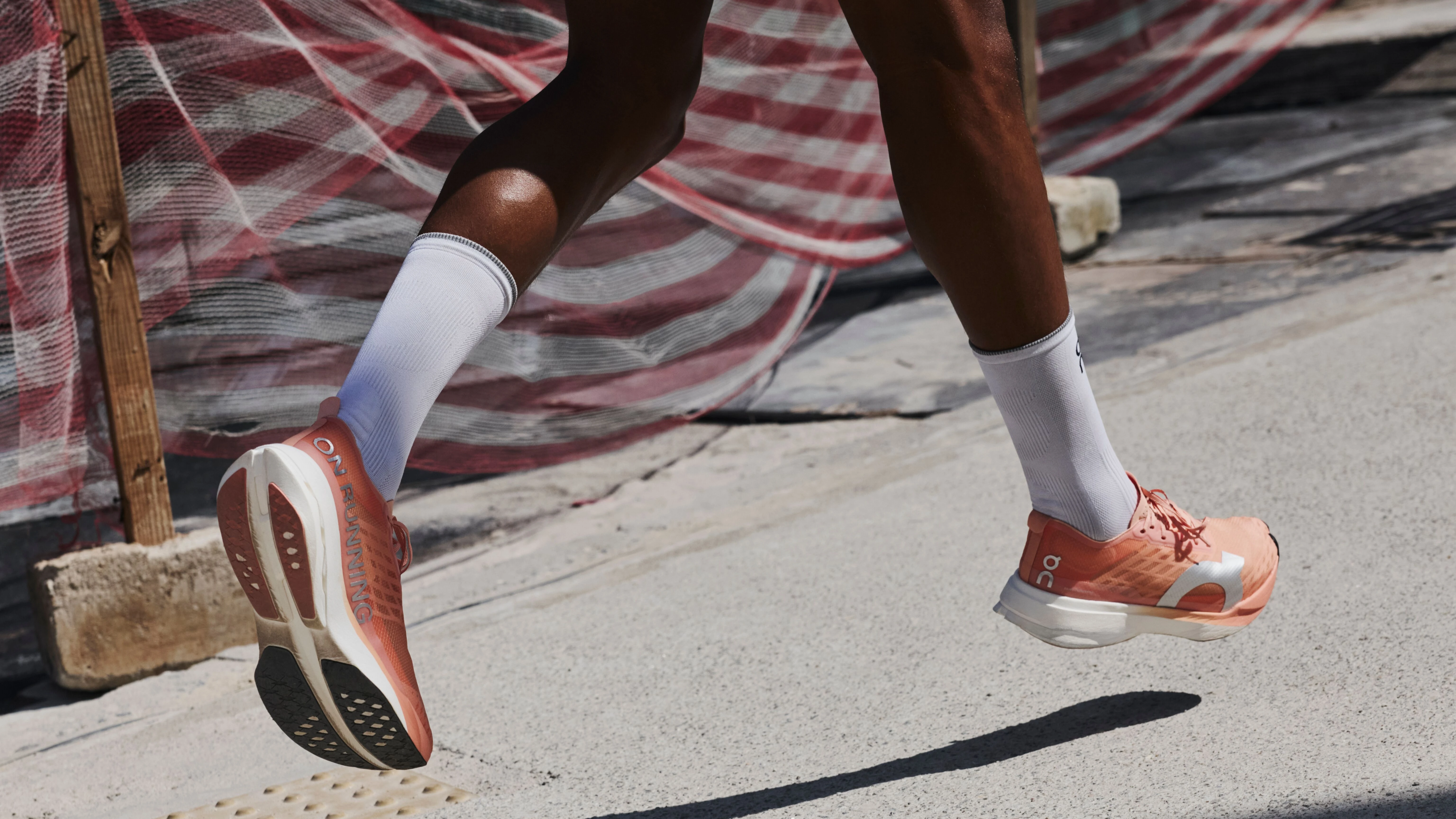
The Cloudboom Strike is designed for the demands of the marathon.
They’re Jade Reilly’s go-to marathon shoe. “They’re cushioned enough to support me but not so much that I feel unstable,” says the On ambassador.
A one-piece, semi-transparent mesh upper delivers breathability and a secure, locked-in fit, helping the foot stay stable through long efforts. “The upper moves with my foot and the tight knit laces help me to feel secure.”
She also likes how they give her a “rolling forward feeling, propelling me when it counts.” That sensation comes from Bounceboard, a drop-in midsole made of Helion™ HF hyper foam, designed to create a responsive, propulsive ride.
By placing this ultra-responsive Pebax® foam directly underfoot and removing the traditional strobel layer, the Cloudboom Strike maximizes energy return and impact protection while staying within World Athletics stack height limits.
“The combination of the Helion™ HF hyper foam and the plate creates a ride that feels extremely responsive without becoming overly aggressive,” says Paniza. “Some racing shoes feel fast for a few kilometers but demand too much from your legs over time. With the Cloudboom Strike, I can stay relaxed and efficient even late in long sessions or deep into a marathon.”
The result is a race shoe that balances cushioning and speed, helping protect your legs from repetitive road impact while maintaining momentum deep into the race.
What it’s best for | What to know |
|---|---|
High energy return at marathon pace | The 4mm drop and rocker geometry may favor a midfoot-to-forefoot strike |
Long-distance race durability | Traditional lacing allows for a more adjustable fit |
Cushioned race-day protection | Optimized for road racing and paved marathon courses |
3. Cloudboom Volt
Best for: Speed training
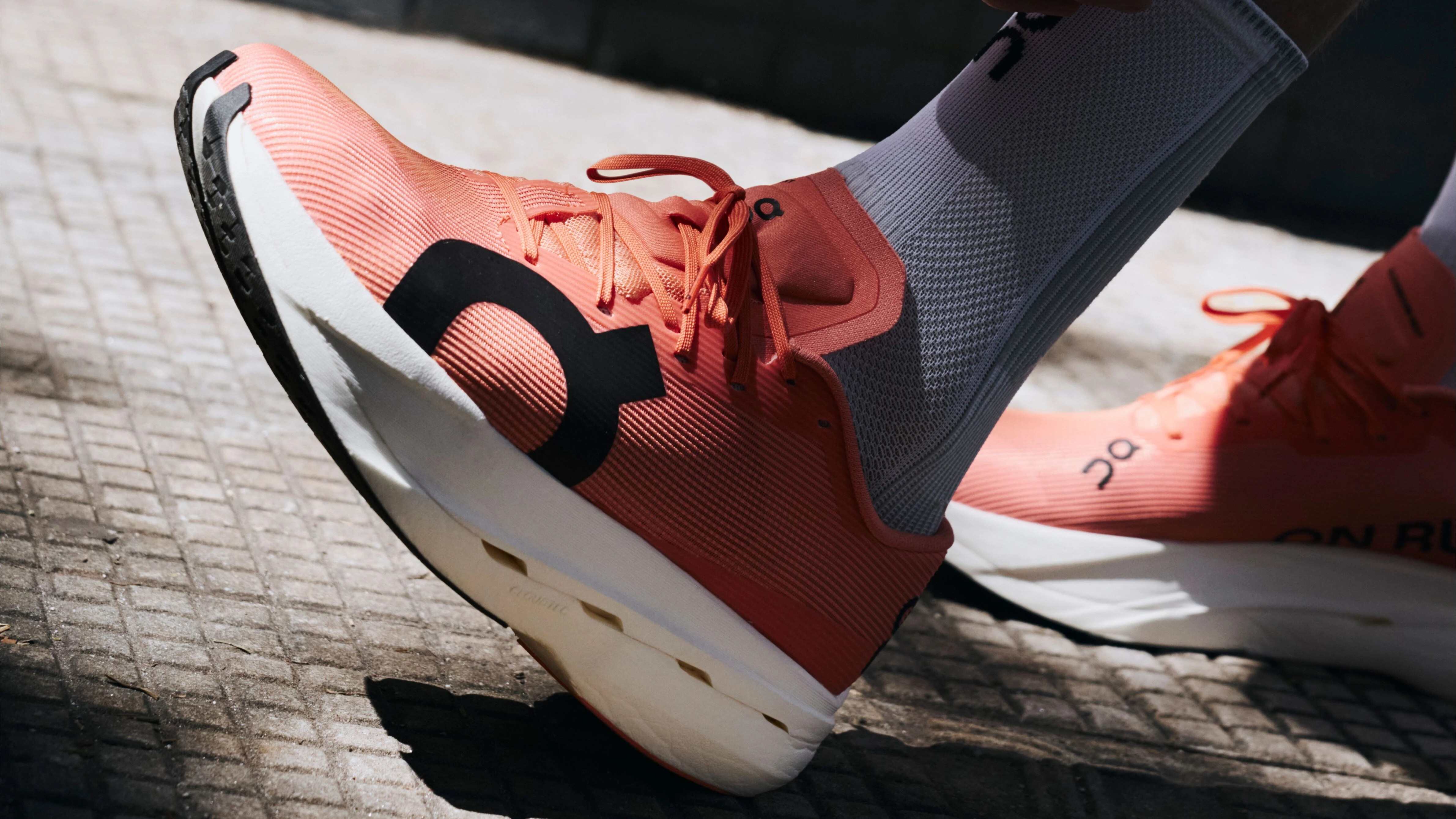
The Cloudboom Volt bridges the gap between training and racing.
It shares the same race-day DNA as On’s top marathon shoes, combining Helion™ HF hyper foam with a carbon Speedboard®, while delivering a more stable, approachable ride for performance-focused training.
A dual-layer midsole softens impact while maintaining a responsive, propulsive feel underfoot. That balance makes the Cloudboom Volt ideal for tempo runs, marathon-pace sessions and long intervals – workouts that prepare your body for race-day demands.
If you want a shoe that can handle key workouts and transition into race day, this is it.
What it’s best for | What to know |
|---|---|
Training-to-race-day versatility | Designed to feel supportive across a range of paces |
Responsive propulsion | High-stack 41mm heel delivers maximum cushioning and protection |
Accessible race-inspired performance | Best suited for runners with a neutral gait |
Marathon training shoes
Training shoes are the foundation of marathon preparation. They absorb repetitive impact, reduce fatigue across high-mileage weeks and support the consistency that race day is built on.
4. Cloudmonster 3
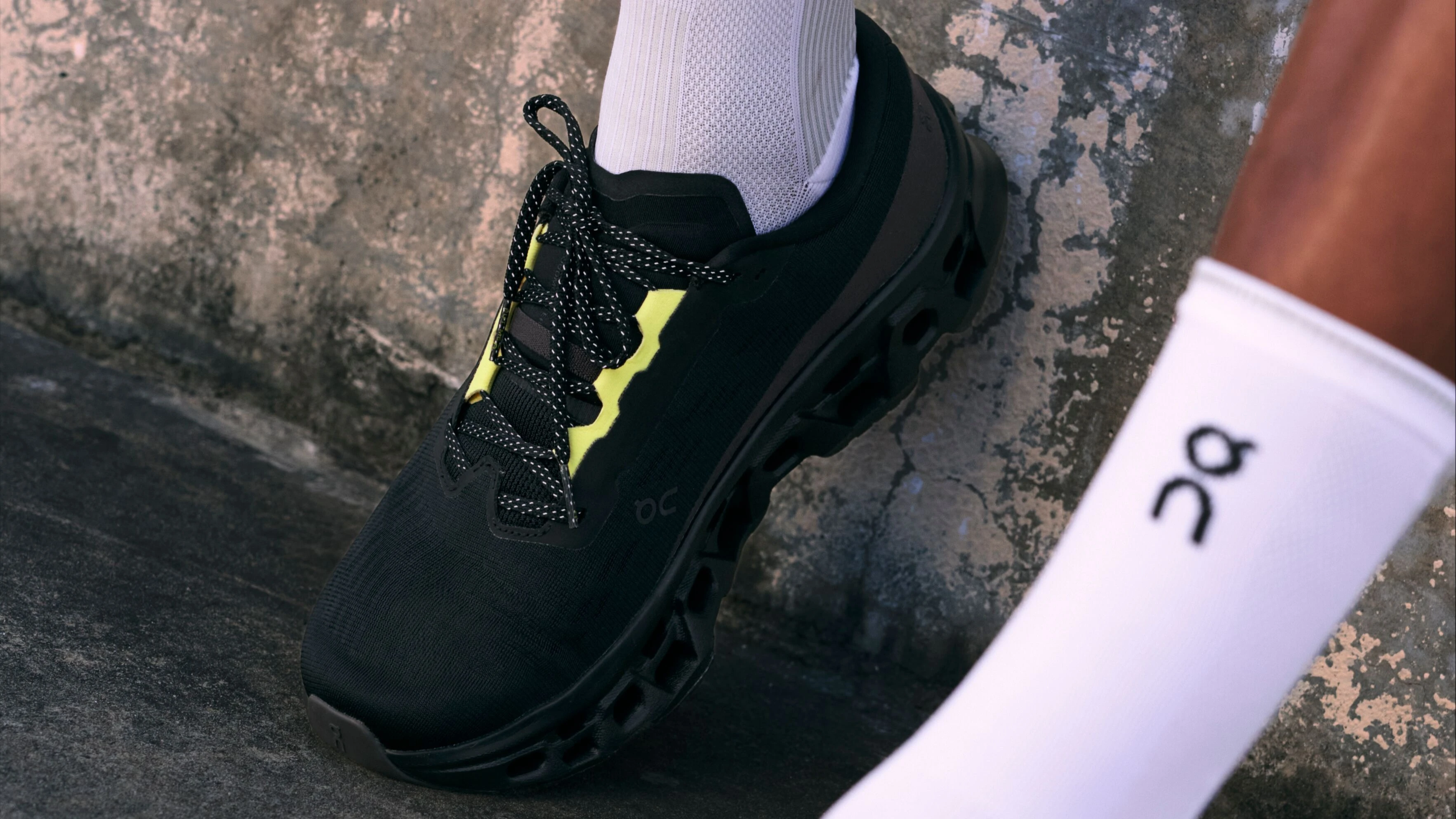
Best for: Training, everyday mileage
The Cloudmonster 3 is built for the miles that don’t get seen. Its triple-layer CloudTec® cushioning provides structured protection, absorbing impact without feeling too soft or unstable.
A refined engineered mesh upper provides a more secure fit than previous iterations, while the propulsive rocker geometry and re-engineered Speedboard® help guide your stride forward – especially when fatigue sets in late in a long run.
For Reilly, that balance of cushioning and support becomes noticeable during higher-mileage weeks. “My legs never feel as fatigued as I had anticipated,” she says. “The support from the Monster family have been a real game changer as the marathon bug has taken over my training, and these shoes have helped me adapt to increased mileage with more ease than I expected.”
Paniza also points to the shoe’s recovery benefits. “After long runs in a highly cushioned and forward-rolling shoe like the Cloudmonster, my legs usually feel fresher and less beaten up the next morning,” he says. “The cushioning absorbs a lot of the repetitive impact, while the forward-rolling sensation keeps the stride flowing naturally and efficiently.”
These small recovery gains can make a big difference across a marathon training block. Feeling fresher the next morning can completely change the quality of your next session.
What it’s best for | What to know |
|---|---|
High-volume training and long runs | Triple-layer system offers a firmer, more stable ride than sink-in plush trainers |
Impact protection during recovery days | Standard 6mm offset that caters to a wide variety of running styles |
Everyday comfort across marathon blocks | Built for durability and protection rather than all-out racing speed |
5. Cloudboom Max
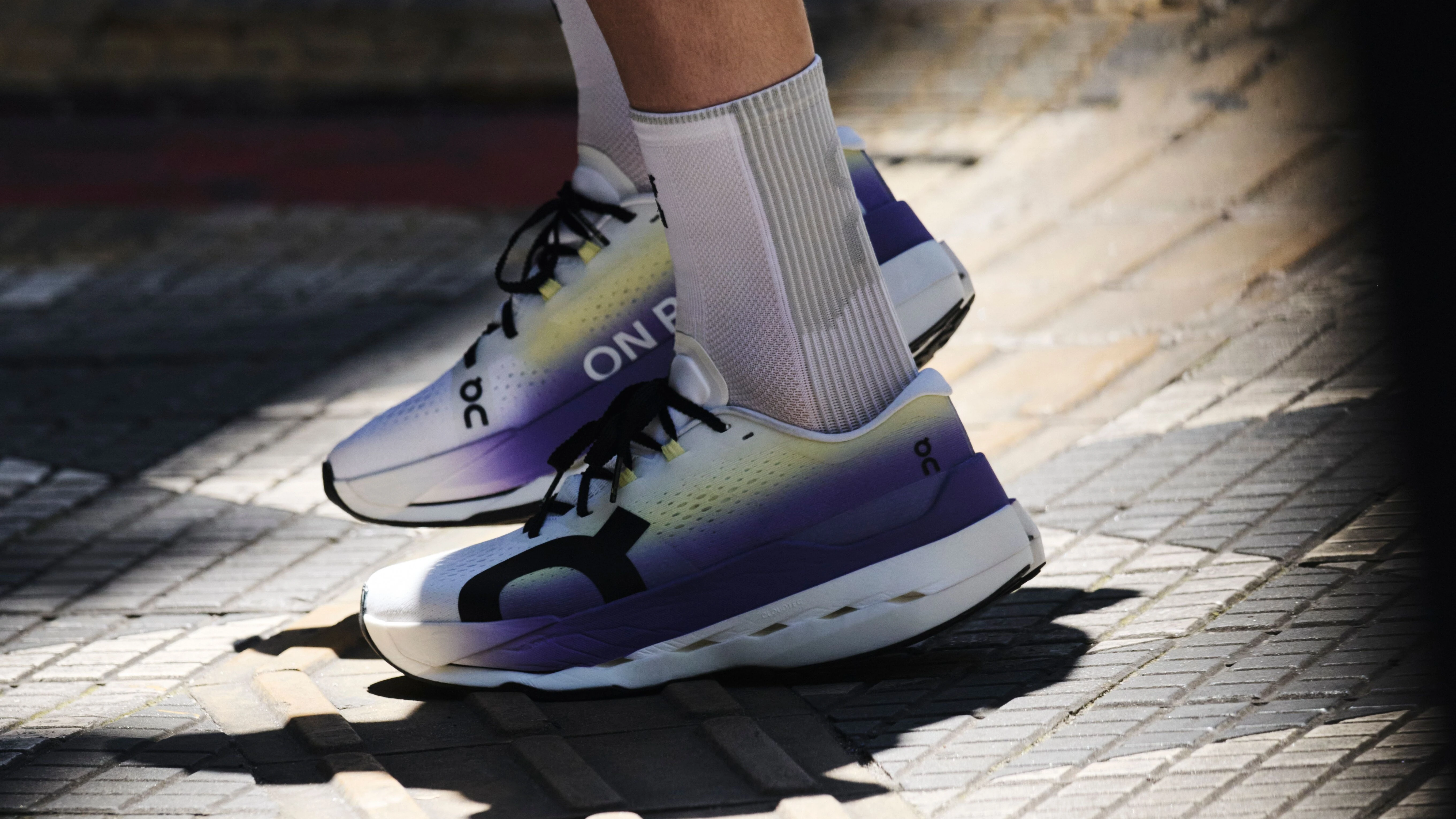
Best for: Training, with more propulsion, cushion and race-day feel
The Cloudboom Max sits between a trainer and a racer.
A high-stack Helion™ HF hyper foam midsole delivers race-level energy return, while a glass-fiber Speedboard® adds propulsion without the rigidity of a full carbon plate.
Designed for long runs at marathon pace and demanding workout sessions, the Cloudboom Max helps simulate race-day effort without overloading your legs in a dedicated race shoe. It offers more protection than a racer while feeling faster and more response than a daily trainer.
What it’s best for | What to know |
|---|---|
Long runs and workouts near marathon goal pace | High-profile midsole may require a short adjustment period for stability |
Reducing fatigue during peak mileage weeks | Better suited for workouts and long runs than easy recovery runs |
Transitioning from training to race day | Uses premium race-inspired materials and responsive cushioning |
Choosing your marathon shoes
The best marathon shoes depend on how you run, not just how fast. Some runners prioritize speed and responsiveness. Others need more cushioning and protection to stay consistent through high-mileage training. Most need a combination of both, depending on the session and stage of their marathon build.
Key considerations:
- Race goals: Are you chasing a PR or finishing strong?
- Experience: More cushioning can help newer runners manage impact, while experienced runners may prefer lighter shoes with more energy return.
- Fit: Your feet naturally swell during long runs and races, so look for enough room in the toe box without sacrificing lockdown.
- Weight: Lighter for speed, heavier for durability.
- Stack height: Higher stacks of foam reduce impact late in the race.
- Drop: Match to your natural running gait and injury history.
- Timing: Break-in shoes well before race day.
- Race terrain: Most marathon shoes are optimized for pavement, so look for specialized traction if your course includes sections of gravel or park paths.
- Rotation: Train in durable shoes, race in performance pairs.
Choosing marathon training shoes
Training shoes are your daily partners, designed to absorb the repetitive impact of high-volume weeks while keeping your legs fresh for the next session.
For easy miles and recovery runs, look for maximum cushioning and a stable platform to minimize muscle fatigue. For workouts – think tempo runs and interval training – look for something lighter and more responsive and that still offers enough protection to handle harder training loads.
Choosing race day shoes
Race-day shoes should feel natural at pace. In a marathon, efficiency matters just as much as speed, especially as fatigue starts to affect your mechanics in the final 10km. For Reilly, that combination of propulsion and protection is what makes the Cloudboom Strike stand out. “The carbon plate helps me empty the tank while the foam helps me to keep lifting my legs as opposed to dragging myself along,” she says. “The stack height keeps me supported and confident in reaching that finish line.”
Panzia also values a shoe that maintains momentum deep into the race. “In the final 10k, forward rolling becomes one of the most important sensations for me,” he says. “When fatigue hits and your form starts to break down, having a shoe that naturally keeps you moving forward helps preserve rhythm and efficiency with less wasted energy.”
He also points to “cushioning that protects the legs but still feels dynamic and connected to the pace.” He thinks the best marathon shoes are the ones that help you maintain momentum and good mechanics “even when your body is fighting against you.”
Testing your intended race shoe during speed sessions is essential to make sure the fit feels comfortable when the intensity climbs.
Striking the right balance
The best marathon shoe is the one that aligns with your individual preferences, pace and goals. Some runners prefer speed while others gravitate towards protection. That balance is what stands out to marathoner Paniza. “As someone training high-mileage, that balance between performance and recovery is something I value a lot.”
Whether you prioritize race-day speed, maximal cushioning or stripped-back precision, your marathon shoes should feel like a natural extension of your stride. Success on race day is built on the confidence, durability and recovery your marathon gear provides during the hundreds of miles leading up to the start line.
Build a rotation that supports both your training and racing – protection for the miles that shape you, and speed for the ones that count.
FAQ
Should you race in the same shoes you train in?
Most runners don’t. Trainers handle daily mileage while race day shoes are usually saved for speed and efficiency.
How many miles should you run in your shoes to break them in before race day?
Aim for 30-50 miles. For super shoes, 20-40 miles to maintain freshness. Enough to break them in, and not too much to wear them out. Complete at least one long, pace-specific run in them to confirm they handle high-intensity efforts without causing friction.
Are carbon-plated running shoes worth it for the marathon?
For performance-focused runners, yes. They improve running economy but require lower-body strength and adaptation to handle the propulsion.
What’s the difference between marathon training shoes and race-day shoes?
Training shoes prioritize impact protection and long-term durability to handle the grind of a long marathon training plan. Race-day shoes are precision instruments stripped of every non-essential gram to maximize speed and energy return. While trainers protect your body during the buildup, racers are designed for marathon endurance.